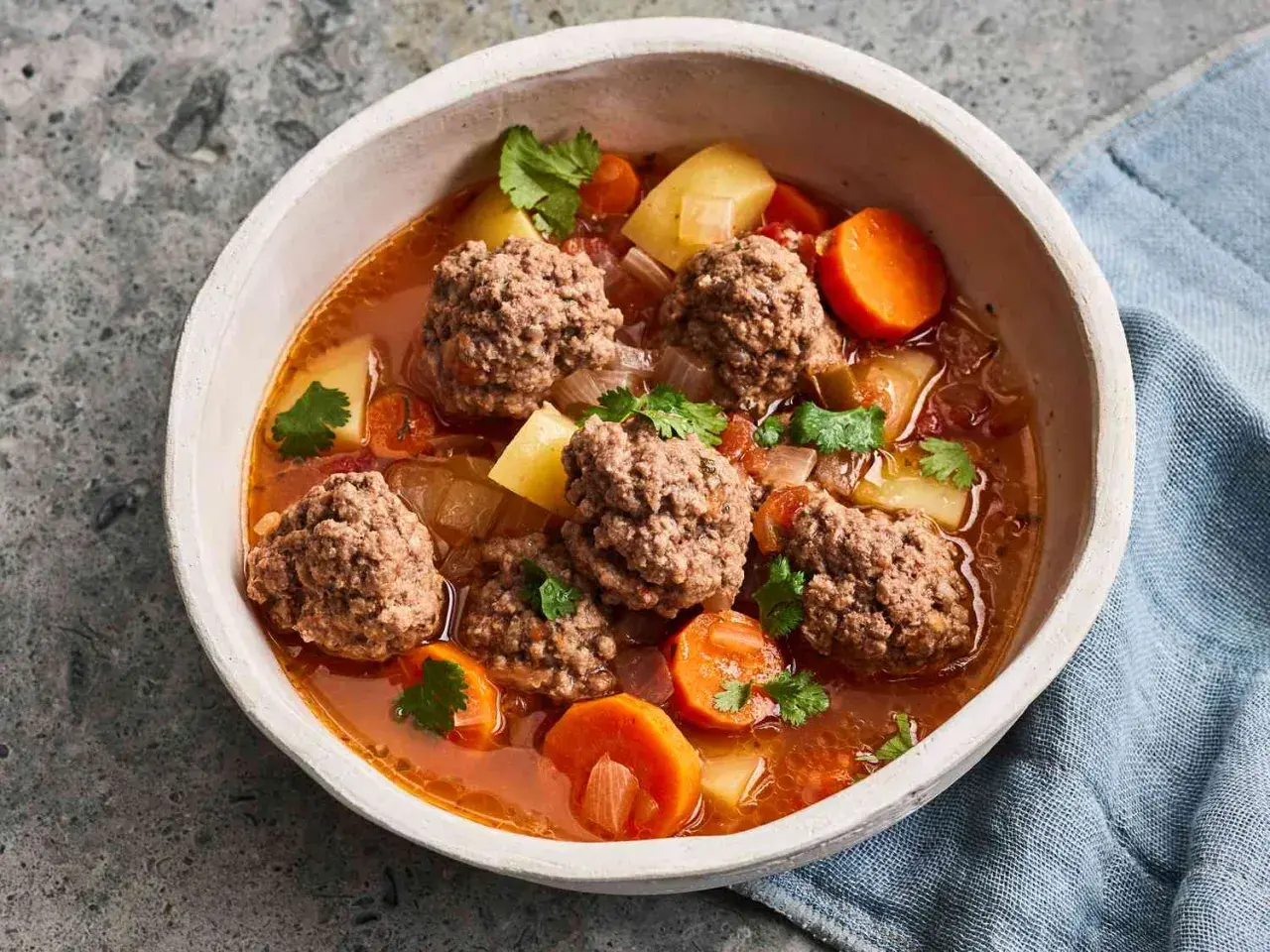
I like Spanish meatballs because they show how much restraint matters in Iberian cooking. Albóndigas are usually small, tender, and served in sauce, but the sauce can shift from tomato and paprika to almond, saffron, or a cleaner wine-led finish depending on the region. This article breaks down what the dish is, which meats work best, how the sauce changes across Spain, and how I would cook and serve them at home without losing their character.
What matters most when making Spanish meatballs well
- Albóndigas are meant to be tender and saucy, not dry or oversized.
- A beef-and-pork mix is the safest classic choice, but veal, lamb, and even poultry all work with the right balance.
- The binder matters: bread soaked in milk, egg, and gentle mixing keep the texture soft.
- Tomato is common, but almond, saffron, wine, and sofrito-based sauces are all part of the Spanish picture.
- For a UK kitchen, the big win is simple: choose good mince, keep the seasoning clean, and simmer slowly.
What Spanish meatballs are really about
Albóndigas are not just “meatballs in sauce”. In practice, they sit somewhere between a tapa, a home-style stew, and a comfort dish that can be stretched into a full supper with bread or potatoes. In Spain.info, they appear among traditional recipes for a reason: they are the sort of dish that survives because every household can make it, adjust it, and serve it in a way that suits the day.
What I think defines them most is scale. They are usually smaller than many British meatballs, which helps them stay tender and lets the sauce cling properly. The best versions are juicy first and flavourful second; if you get the texture right, the rest is much easier. That flexibility is why regional sauce styles matter so much, and that is where the picture gets more interesting.
How the sauce changes from region to region

There is no single fixed sauce for albóndigas across Spain. Some versions lean on tomato and garlic, others use wine, and some go richer with almonds, saffron, or a picada. Serious Eats notes that Spanish versions often move between tomato, garlic, and almond-based sauces, which is a useful clue: the dish is defined more by balance than by one canonical recipe.
| Style | Flavour profile | Best use |
|---|---|---|
| Tomato and paprika | Familiar, savoury, slightly sweet | A straightforward tapas plate or weeknight supper |
| Wine and sofrito | Deeper, lighter on sweetness, more aromatic | Serving with bread, boiled potatoes, or rice |
| Almond or saffron picada | Richer, more layered, slightly nutty | When you want a more restaurant-like finish |
| Northern Spanish adaptation | Cleaner, pepper-led, sometimes mushroom-friendly | A Basque-leaning table where you want less heaviness |
One useful technical term here is picada, a Catalan finishing paste made from ingredients such as almonds, parsley, garlic, and sometimes bread. It thickens the sauce and adds depth without making the dish heavy. That matters because once you understand the sauce, choosing the meat becomes much simpler, which is the next decision worth getting right.
Which meat gives the best result
I would not start with the sauce. I would start with the mince. The meat choice shapes the texture, richness, and how forgiving the dish will be once it hits the pan. For a UK kitchen, where supermarket mince can be quite lean, that choice matters even more.
| Meat choice | What it gives you | My view |
|---|---|---|
| Beef and pork | Balanced flavour, good fat, reliable tenderness | The safest classic home version |
| Veal and pork | Finer texture and a lighter finish | Best when you want a more delicate tapas-bar feel |
| Lamb | Deeper, more savoury flavour | Excellent with wine-heavy or peppery sauces |
| Chicken or turkey | Lean, mild, easy to overcook | Works, but only if you add extra moisture and keep the simmer gentle |
If I were making them on a normal weeknight, I would choose a 50/50 beef-and-pork mix for 4 people, usually around 500 g total. If you use poultry, I would add an extra spoonful of olive oil or a little more milk-soaked bread so the mixture does not dry out. That choice of meat only works when the rest of the mix is balanced, which is where the supporting ingredients earn their place.
The ingredient balance that keeps them tender
Spanish meatballs fail when the cook tries to do too much. A good albóndiga is built on a small number of ingredients used with discipline. I like to think of the mix as a structure rather than a flavour bomb: each part has a job, and if one part dominates, the whole dish gets clumsy.
| Ingredient | Typical amount for 500 g meat | Why it matters |
|---|---|---|
| Breadcrumbs soaked in milk | 40-50 g breadcrumbs with about 60 ml milk | Keeps the centre soft and prevents a tight, bouncy texture |
| Egg | 1 medium egg | Binds the mixture without making it heavy |
| Onion and garlic | 1 small onion and 2 garlic cloves | Builds sweetness and savoury depth |
| Parsley | 1 to 2 tablespoons chopped | Lifts the flavour and keeps the mix from feeling flat |
| Paprika or saffron | 1 teaspoon paprika, or a pinch of saffron in the sauce | Gives the dish a Spanish accent without overwhelming it |
| Sauce base | About 400 g tomatoes, 150 ml stock, and 75 ml white wine, or an almond-based variation | Sets the style of the final dish |
The common mistake is to keep adding flavourings until the meat itself disappears. I would rather taste the mince, the garlic, and the herbs clearly than bury everything under spice. That restraint is what makes the cooking method work, because even a well-balanced mix can be ruined in the pan if you rush it.
How I cook them so they stay tender
I prefer a simple sequence: mix gently, shape small, brown lightly, then finish in sauce. That sounds basic, but the details make the difference between a soft, juicy meatball and one that feels compact or crumbly.
- Soak the breadcrumbs in milk for 5 minutes, then stir them into a paste.
- Add the meat, egg, onion, garlic, parsley, salt, pepper, and paprika, then mix just until combined.
- Rest the mixture for 10 minutes so the breadcrumbs hydrate properly.
- Shape 18 to 22 small meatballs from 500 g of mince, aiming for about 20 to 25 g each.
- Brown them in olive oil for 2 to 3 minutes per side. You are looking for colour, not full cooking.
- Build the sauce in the same pan, add wine or stock, return the meatballs, and simmer gently for 12 to 15 minutes.
Do not boil them hard. A violent simmer tightens the meat and can split a delicate sauce. I want the sauce to coat the back of a spoon, not cling like paste. Once the meatballs are cooked through, I let them sit for 5 minutes before serving so the juices settle back into the meat rather than leaking onto the plate. That pause matters more than most people expect, which leads naturally to what the dish should sit beside.
What to serve with them and how to keep the plate balanced
Albóndigas can be a tapa, a starter, or a main dish, depending on portion size. I usually think in terms of how many meatballs end up on the plate rather than the recipe title. Three or four small meatballs make a good tapa; six to eight work as a proper main for one person if the sides are light.
| Serving style | Portion guide | What I would put with it |
|---|---|---|
| Tapa | 3-4 small meatballs per person | Crusty bread, olives, roasted peppers |
| Main course | 6-8 small meatballs per person | New potatoes, rice, or a simple green salad |
| Pintxo-style plate | 2-3 meatballs on a skewer or small plate | Pickled peppers, toothpicks, and bread for dipping |
| Basque-leaning supper | 5-6 meatballs per person | Charred peppers, greens, and a dry white wine such as txakoli if you can find it |
For a UK table, I would keep the sides simple and avoid heavy starches all at once. Bread is non-negotiable if the sauce is good, because the sauce is part of the pleasure, not just a garnish. If you want the dish to feel more northern Spanish, keep the vegetables bright and the drink crisp, which brings us to the mistakes that flatten the whole thing.
Where home cooks usually get them wrong
The biggest problems are usually technical rather than creative. People either make the mixture too lean, pack it too tightly, or cook it too hard. Those errors are common because they feel efficient, but albóndigas reward the opposite approach.
- Using very lean mince makes the meatballs dry. If the meat has little fat, add moisture through pork, milk-soaked bread, or a little olive oil.
- Overmixing turns the texture dense. Mix only until the ingredients come together.
- Making them too large means the outside can toughen before the centre is ready. Small meatballs are better here.
- Skipping salt in both the mix and the sauce leaves the dish flat. Season in layers.
- Boiling the sauce instead of simmering it can split the meatballs or make them grainy.
There is also a flavour mistake I see often: too many competing accents at once. Paprika, cumin, chilli, smoked salt, multiple herbs, and a heavy tomato base can all fight each other. I would rather have one or two clear signals, then let the meat and sauce do the rest. That discipline is what makes the final version feel at home in a Basque-inspired meal, which is where I would actually place it on the table.
The Basque-leaning plate I would actually serve
If I were building a supper around albóndigas for a dinner that fits a Basque-minded kitchen, I would keep the logic simple: tender meat, a clean sauce, good bread, and something fresh beside it. I would also make the dish a day ahead if possible, because the sauce settles and the flavour deepens overnight. It is one of those recipes that tastes more coherent after a short rest in the fridge.
For make-ahead cooking, I would chill the cooked meatballs and sauce for up to 3 days, or freeze them for up to 3 months in a sealed container. Reheat slowly with a splash of stock if needed. That is the version I come back to most often: practical, generous, and far more satisfying than any overcomplicated version trying too hard to impress.
