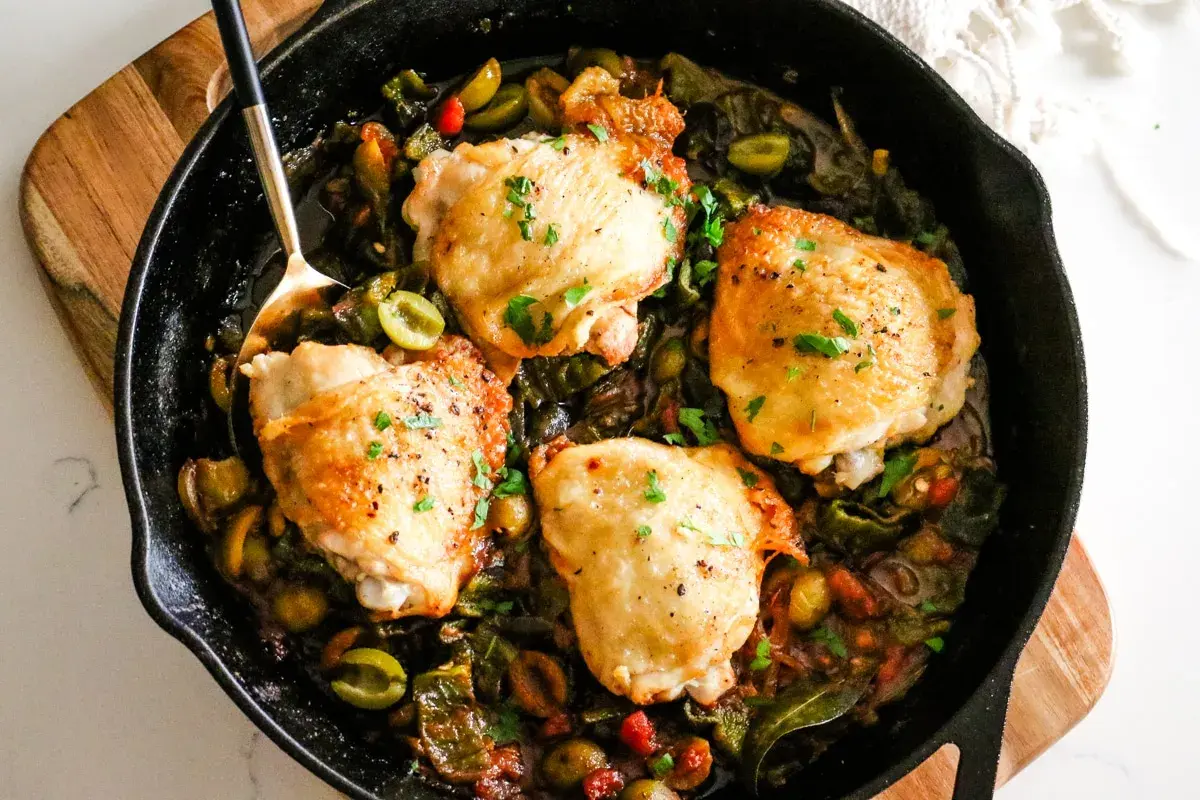
The appeal of chicken basque is simple: tender chicken, sweet peppers, tomatoes, garlic, and a warm, gentle chilli note built into one pan. The dish looks rustic because it is rustic, but the best versions have real precision behind them, from the cut of chicken to the way the sauce is reduced. In this article, I break down what the dish actually is, which ingredients matter most, how I would cook it at home, and what to serve with it for a proper meal.
What matters most before you start
- Use bone-in, skin-on chicken thighs if you want the most forgiving result.
- The flavour base is built on peppers, onions, tomatoes, garlic, olive oil, and mild chilli heat.
- Piment d'Espelette gives the most authentic flavour, but sweet paprika with a little cayenne works well in a UK kitchen.
- Expect about 15 minutes of prep and 55 minutes of cooking for a four-person meal.
- The dish is best with rice, crusty bread, or buttered new potatoes because the sauce deserves something to soak into.
- It tastes even better the next day, which makes it a strong make-ahead dinner.
What this dish actually is
At its core, this is Basque-style braised chicken: browned pieces of chicken simmered in a pepper-and-tomato sauce until the meat turns tender and the flavours knit together. I think the reason it works so well is that it sits between a stew and a skillet dish, so it feels comforting without becoming heavy. You get bright vegetables, a savoury base, and enough sauce to make the meal feel complete.
What distinguishes it from a generic chicken stew is the flavour profile. The sauce is built around sweet peppers, onion, tomato, and a mild, fragrant heat rather than cream or aggressive spice. That balance matters, because Basque cooking often tastes direct and clean rather than complicated; it lets the ingredients do the talking. Once you understand that, the rest of the recipe becomes much easier to judge. That leads naturally to the ingredient choices that make or break the pan.
The Basque flavour base that gives it character
The heart of the dish is often called piperade, which is simply a pepper-and-tomato mixture cooked down with onion, garlic, and oil. In practice, it is the sauce foundation, and it carries most of the personality. If the peppers stay raw, the tomatoes taste sharp, or the onions are rushed, the whole dish feels thin even if the chicken is well cooked.
I usually think about the flavour base in three layers:
- Sweetness from peppers and slowly softened onions.
- Acidity from tomatoes and a splash of white wine.
- Gentle heat from piment d'Espelette, or a careful substitute.
That combination is why the dish feels so satisfying without needing a long ingredient list. The sauce should taste sunny, savoury, and slightly smoky, but never muddy. Once that base is in place, the question becomes which ingredients to buy and how to adapt them sensibly for a UK kitchen.
Ingredients that work in a UK kitchen
I prefer to keep the shopping list tight and practical. The classic flavour is not fragile, but the chicken cut and the pepper seasoning matter more than most home cooks expect. Here is the version I would make for four people.
| Ingredient | Why it matters | UK-friendly note |
|---|---|---|
| 1.2 kg bone-in, skin-on chicken thighs | They stay juicy through braising and give the sauce more flavour. | This is my first choice; drumsticks or mixed pieces also work. |
| 2 red peppers and 1 green pepper | They provide sweetness, colour, and the dish’s signature body. | Use good-quality fresh peppers, not jarred ones, if you can. |
| 1 large onion and 3 garlic cloves | They round out the sauce and stop the tomatoes tasting flat. | Slice the onion fairly thin so it melts into the sauce. |
| 400 g chopped tomatoes | They give the stew its red, glossy finish and enough acidity to keep it lively. | Good canned tomatoes are fine and often better than weak fresh ones. |
| 150 ml dry white wine and 150 ml chicken stock | They add depth and help the sauce reduce properly. | Choose a dry, uncomplicated white rather than anything oaky or sweet. |
| 1 tsp piment d'Espelette or a substitute | It brings the mild Basque heat and a subtle peppery lift. | If you cannot find it, use sweet paprika plus a small pinch of cayenne. |
If I had to cut one corner, it would never be the chicken quality; it would be the spice. The right pepper seasoning gives the dish identity, while the wrong substitute can leave it tasting merely like chicken in tomato sauce. That is why the cooking method matters so much, because it helps the ingredients behave like a proper whole rather than a loose collection of parts.

How I cook it step by step
This is the method I trust when I want a proper, relaxed dinner that still tastes deliberate. It takes about 15 minutes to prep and 55 minutes to cook, and it serves 4.
- Season the chicken with salt and black pepper, then brown it in olive oil over medium-high heat until the skin is deep golden. I usually give it 5 to 6 minutes on the first side and another 2 to 3 minutes on the second.
- Lift the chicken out and soften the onion and peppers in the same pan for about 8 to 10 minutes, stirring often so they turn glossy and lightly sweet rather than browned in patches.
- Add the garlic and cook for 30 seconds, then stir in the piment d'Espelette or your paprika mix so the spice blooms in the oil.
- Pour in the white wine and let it reduce for 2 to 3 minutes. This step strips off the raw alcohol edge and keeps the sauce from tasting flat.
- Add the tomatoes, stock, and a bay leaf, then bring the pan to a steady simmer.
- Return the chicken to the pan, skin side up, cover loosely, and simmer for about 30 to 35 minutes. The chicken should reach 75 C at the thickest point.
- Uncover the pan for the last 5 to 10 minutes if you want a thicker sauce, then finish with chopped parsley and a final taste for salt.
I find that the last reduction is where the dish really settles into itself. Too little and the sauce feels thin; too much and it loses the easy, spoonable quality that makes the meal so good with bread or rice. Once you know that rhythm, the main risks are easy to avoid.
Mistakes that make it taste flat
The most common problem is treating it like a quick fry instead of a braise. If the peppers never soften, the tomatoes never reduce, and the chicken goes in too late, you end up with separate ingredients rather than a coherent dish. That is the difference between something vaguely Mediterranean and something that tastes intentionally Basque-inspired.
- Using chicken breasts too early can leave the meat dry. If you prefer breasts, add them later and shorten the simmering time.
- Skipping the browning costs you flavour. Those golden bits on the pan are not decoration; they are the base of the sauce.
- Overdoing the spice throws off the balance. The heat should support the peppers, not dominate them.
- Rushing the vegetables leaves the sauce sharp instead of rounded. Give them time to soften properly.
- Adding too much liquid can turn the dish soupy. You want a sauce that coats the chicken, not a broth.
My rule is simple: if the sauce tastes good before the chicken goes back in, the final dish usually works. If it tastes thin or harsh at that stage, the finished pan will not magically fix itself. That is why serving choices matter too, because the right side dish can carry every bit of that sauce.
What to serve with it and when it works best
I usually serve this with something plain enough to absorb the sauce and stay out of the way. The dish is rich in flavour, not rich in cream, so it pairs beautifully with simple starches and a crisp side. If you are cooking for a weeknight dinner, this is the kind of meal that can stretch without feeling stodgy; if you are cooking for guests, it looks more impressive than the effort suggests.
| Side | Why it works | My take |
|---|---|---|
| Steamed rice | It soaks up the sauce cleanly and keeps the plate balanced. | The easiest option when you want dinner on the table quickly. |
| Crusty bread | Best for catching the peppery tomato sauce. | This is my favourite if I am serving the dish casually. |
| Butter new potatoes | They make the meal feel more anchored and a little more British. | Especially good when you want comfort without making it heavy. |
| Green salad or tender greens | They bring freshness and keep the plate from feeling too dense. | Useful if you are serving a bigger lunch or early supper. |
If I were building a full menu around it, I would keep the starter light and let the main course do the heavy lifting. A simple salad, a loaf of good bread, and a dry white wine are enough. The nice part is that the dish does not demand ceremony; it rewards straightforward cooking and generous serving. That is also why I keep coming back to this style of braised chicken.
The version I come back to most often
When I want the cleanest result, I stick to thighs, peppers, tomatoes, white wine, and just enough Espelette-style heat to make the sauce wake up. I avoid adding extra ingredients unless they genuinely improve the balance, because this is one of those dishes that can lose its shape when it is overloaded. A little restraint goes a long way here.
What makes the dish especially useful is that it suits both a relaxed family meal and a slower weekend cook. It reheats well, the sauce deepens overnight, and the leftovers are often even better with rice or mashed potatoes the next day. If you want a Basque-inspired poultry dish that feels generous, practical, and rooted in real flavour rather than gimmicks, this is the one I would make first. And if you keep the peppers sweet, the heat gentle, and the sauce properly reduced, it is hard to go wrong.
