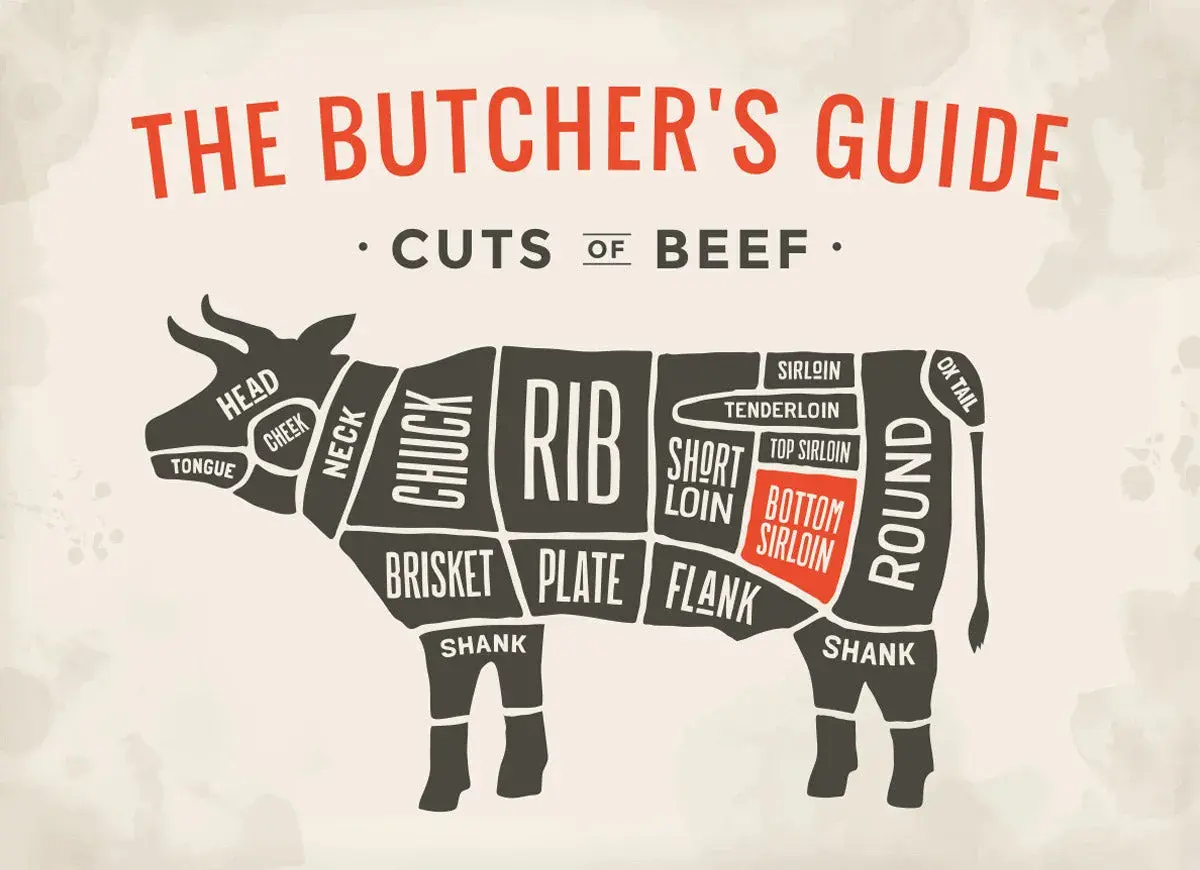
The phrase sirloin tip in Spanish is trickier than it looks because this beef cut does not have one universal label. I usually treat it as a butchery question first and a translation question second: what muscle is it, how lean is it, and what are you planning to cook with it? That matters if you are shopping in Spain, reading a Latin American menu, or trying to match a UK recipe to a Spanish butcher's counter.
What matters most before you buy or cook it
- Sirloin tip is a lean round cut, so it behaves more like a working-muscle roast than a tender steak.
- There is no single one-word Spanish equivalent used everywhere.
- In Latin American retail naming, you will often see labels such as pulpa bola or bistec de bola.
- In Spain, the name depends more on the butcher's regional system than on a literal translation.
- For cooking, braising, pot roasting, or thin slicing usually gives better results than fast, hard heat.
- If you are ordering in a Spanish-speaking market, describe the cooking method as clearly as the cut.
Why the name is misleading
Sirloin tip sounds like it should come from the sirloin, but the muscle is usually taken from the round primal at the front end of the rear leg. That means leaner meat, less marbling, and a texture that rewards the right method rather than brute heat. I would not treat it like a ribeye; I would treat it like a cut that wants either slow moisture or thin slicing.
The practical takeaway is simple. If you know the muscle, the translation becomes much easier. In a Spanish-speaking kitchen, the same piece may be described by the local retail name rather than by a literal dictionary equivalent, which is where most confusion starts. That is why I always ask what part of the animal it comes from before I ask for a translation.

The closest Spanish labels by region
This is where most searches go wrong: people expect one neat translation, but Spanish butchery is regional. The label can shift depending on the country, the retailer, and whether the meat is sold as a roast, a steak, or a milanesa cut. If I had to keep the answer practical, I would say the best Spanish name depends on the market you are standing in.
| Region or context | Common label | What it signals | How I would use it |
|---|---|---|---|
| Spain | Babilla, cadera, tapa, rabillo de cadera | Regional butcher terms for round or rump-side meat, depending on the exact trim | Ask how it will be cut before you buy it |
| Mexico and some Latin American retail counters | Pulpa bola, bistec de bola | A round-tip style label used for lean beef cuts | Thin steaks, milanesa, quick grilling, or braising |
| Argentina and Uruguay | Bola de lomo | Round-side naming that often points to a roastable, sliceable cut | Milanesas or a simple roast |
| General Spanish-language butcher conversation | Regional term plus cooking use | The butcher may care more about the job than the exact English equivalent | State whether you want it for roasting, stewing, or thin slices |
If you want the shortest working answer, I would use pulpa bola or bistec de bola in many Latin American contexts, but I would not assume that is the right label in Spain. A Madrid butcher and a Mexican butcher may both understand the same meat differently, which is why the cut name alone is not enough. When the exact muscle matters, the cooking method matters even more.
How I would cook it without drying it out
For me, the main issue with this cut is moisture management. It is lean enough that a hard sear alone can make it stringy, but it still has enough beef flavour to shine if you respect the grain. If the piece is thick, I would braise or pot roast it; if it is sliced thin, I would grill or pan-sear it quickly after a short marinade.
- Braising or pot roasting works best for a whole roast. Start with a strong sear, then cook gently with onion, garlic, stock, wine, or tomato until the meat relaxes.
- Thin slicing is the better move for quick cooking. Slice across the grain and keep the cook time short so the fibres do not tighten.
- Marinade helps, but it does not rescue everything. Acid, oil, and aromatics can improve flavour and surface tenderness, yet they will not turn a tough roast into a tenderloin.
- Resting matters. A lean cut punished by overcooking is rarely fixed by sauce, but a proper rest gives you a far better slice.
For a Basque-style profile, I like smoked paprika, garlic, onion, green pepper, and a splash of txakoli or dry white wine. That combination feels regional without pretending the cut is something it is not. The next step is knowing how to ask for the right piece in the first place.
What to ask for at the butcher counter
In a Spanish-speaking market, I would not lead with the English name and hope for a perfect match. I would describe the muscle, the shape, and the job I want it to do. That is faster, and it avoids the classic problem where two countries use the same label for different cuts.
- Ask for a lean round cut if you want a roast or thin steaks.
- Say whether you need it for braising, grilling, or slicing very thin.
- Use local terms if you know them, but let the butcher confirm the exact muscle.
- If you are in a Mexican shop, ask whether they would call it pulpa bola or bistec de bola.
- If you are in Spain, ask whether the cut is sold as babilla, cadera, or another regional name.
My rule is simple: the more specific I am about cooking, the better the butcher can help. If I want a Basque-style dinner, I say I need something for slow cooking with peppers or a quick grill for pintxos, not just a name from a glossary. That usually gets a better result than a direct translation ever will.
A Basque-style way to serve it without overcomplicating dinner
This is not the cut I would pick for a grand chuletón. In Basque cooking, that role usually belongs to a thicker, richer steak. Sirloin tip works better when I let it stay humble: a short braise with onions and peppers, or thin slices served over potatoes with a sharp sauce.
- Serve braised slices with piperrada, the pepper-and-tomato style that gives the dish brightness.
- Pair grilled strips with roasted piquillo peppers and coarse salt.
- Use leftovers in a sandwich or a warm salad with olive oil, parsley, and vinegar.
The key is balance. Basque flavour tends to be direct and clean, so I avoid heavy sweet marinades that cover the beef. A little smoke, garlic, and good oil will do more work than a busy sauce ever will, especially when the meat itself is lean and needs a clear purpose.
The shortcut I trust when the label is unclear
If I had to compress the whole topic into one line, I would say this: sirloin tip is a lean round cut, and its Spanish name changes with the country and butcher. That is why the smartest move is to match the cooking method first and the vocabulary second.
When the cut is trimmed well and cooked with restraint, it gives you solid beef flavour without wasting money on a more expensive steak. When it is badly translated or overcooked, it becomes an expensive disappointment. I would always rather buy the right muscle under the wrong label than the wrong muscle under a perfect label.
For a UK cook, the safest habit is to ask what part of the animal it comes from, how it is trimmed, and whether the butcher recommends roasting, braising, or thin slicing. That keeps the conversation practical, and it is usually the shortest route to a better plate.
