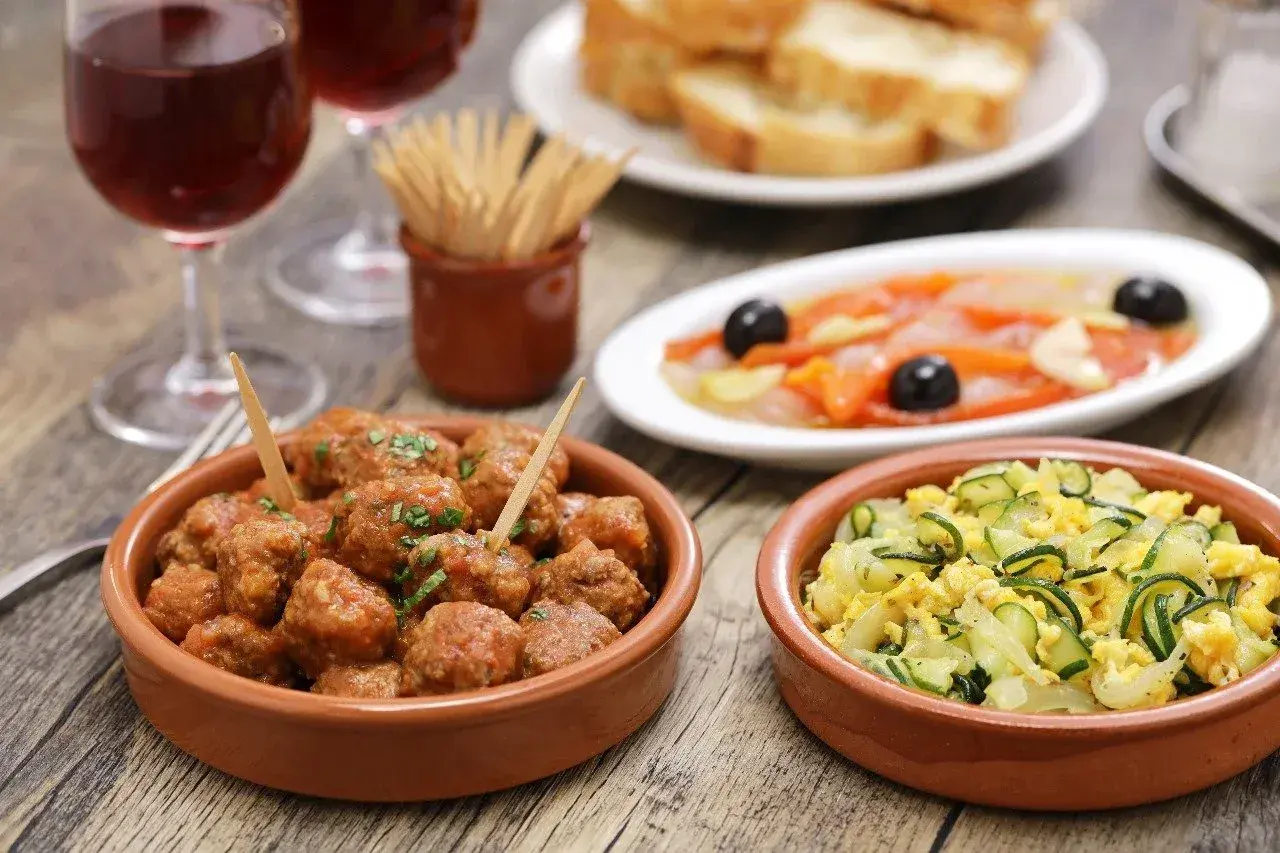
What to know before making them
- Small meatballs work better than large ones because they cook evenly and stay tender.
- A mix of beef and pork gives better flavour and juiciness than very lean mince alone.
- Milk-soaked bread or breadcrumbs helps keep the texture soft instead of compact.
- Tomato sauce is the most familiar option, but almond, sherry, or saffron-based sauces also fit the dish.
- In the UK, I cook minced-meat dishes until they are properly hot throughout, following Food Standards Agency guidance.
What makes them different from other meatballs
The simplest way to think about Spanish meatballs is this: they are built for sauce, not for size. Italian-style meatballs often lean on cheese and a bigger, more assertive seasoning profile, while the Spanish version usually stays cleaner in the mix and lets the sauce do more of the talking. They are often smaller, easier to share, and much more at home as a tapa than as a heavy main.
That difference matters because it changes how I season and cook them. If the meat mixture is too rich, the sauce feels flat; if the meatballs are too lean, the whole dish turns dry. The sweet spot is a well-seasoned meatball with enough fat to stay soft after a short simmer. Once that balance is right, the rest of the recipe becomes much easier to control.
The ingredients that matter most
When I cook this dish, I keep the shopping list tight. The flavour comes from a few ingredients used well, not from piling in everything in the cupboard. In a UK kitchen, the practical base is mince, bread, milk, garlic, parsley, onion, paprika, and a good tomato sauce. That is enough to make the dish taste recognisably Spanish without turning it into something fussy.
| Choice | Why it matters | My practical pick |
|---|---|---|
| Meat | Fat carries flavour and keeps the texture soft | A beef and pork mix works best for most home cooks |
| Binder | Prevents the mixture from tightening too much | Fresh breadcrumbs or bread soaked in milk |
| Seasoning | Creates the Spanish profile | Garlic, parsley, onion, smoked paprika, salt, and black pepper |
| Sauce base | Gives the dish depth and moisture | Onion, garlic, tomato, white wine, or stock |
| Optional extras | Add regional character without changing the core idea | Saffron, almonds, piquillo peppers, or a little jamón |
If you want a lighter version, turkey or chicken mince can work, but I would not use them straight from the packet without adjustment. Poultry mince is much leaner, so it benefits from a little olive oil, extra bread soaked in milk, or even a small amount of pork to stop the result from becoming dry. That is the trade-off: lighter meat gives you a softer flavour, but it also gives you less margin for error.
Once you have the right mix, the method is mostly about restraint. The less you overwork the meat, the better the final texture will be, which is why the next step matters so much.
The method I trust for tender meatballs
I like to keep the process simple and repeatable. You do not need unusual technique here, but you do need patience at three points: mixing, shaping, and simmering. Those are the places where home cooks usually overdo it.
- Soak the bread in milk for a few minutes, then mash it into a soft paste.
- Combine the meat, onion, garlic, parsley, paprika, seasoning, and binder gently until just mixed.
- Shape small meatballs, roughly 25 to 30 g each, so they cook evenly.
- Chill them for 15 to 20 minutes if the mixture feels soft or sticky.
- Brown them in batches, turning carefully so they colour without falling apart.
- Finish them in the sauce with a gentle simmer, not a hard boil.
That last point is the one I would never skip. A hard boil can split the meatballs and make the sauce greasy, while a gentle simmer lets the meat finish cooking without losing its shape. For a UK kitchen, I follow Food Standards Agency advice and cook minced-meat dishes until they reach 70°C for 2 minutes in the centre. If you do not use a thermometer, aim for meatballs that are fully cooked through and piping hot all the way across when you cut one open.
I also prefer to brown them before the sauce goes in. It adds depth, helps the surface hold together, and gives the finished dish a more deliberate, tapas-bar feel. Once that browning is done, the sauce becomes the final layer rather than the only source of flavour.
Sauce styles that suit the dish
Tomato sauce is the version most people expect, and for good reason. It is bright, easy to work with, and it gives the meatballs a familiar, comforting base. But Spanish-style meatballs are broader than that one version, and the sauce can change the whole mood of the dish. Some sauces are rustic and familiar, others are more regional and more interesting.
| Sauce style | Flavour profile | Best use |
|---|---|---|
| Tomato and onion | Bright, rounded, and very approachable | Weeknight cooking and family meals |
| Tomato with wine | Slightly deeper and more savoury | When you want a restaurant-style finish |
| Picada and stock | Nutty and aromatic, with more body | When you want a Catalan-leaning version |
| Sherry and peppers | Warm, slightly sweet, and fuller in flavour | Tapas spreads and more layered plates |
| Saffron broth | Lighter, more delicate, and a little elegant | When you want a less tomato-heavy dish |
Picada is worth knowing because it is one of the more useful regional ideas. It is a paste made with ingredients such as toasted almonds, parsley, and sometimes garlic or saffron, then stirred into the sauce to thicken and round it out. You do not need it for every batch, but it is a good move when you want the sauce to taste deeper without becoming heavy.
If I were cooking for a British crowd, I would start with tomato, onion, smoked paprika, and a splash of white wine. It uses familiar ingredients, but it still tastes distinct enough to feel like a proper Spanish dish rather than a generic meatball sauce. From there, the serving style can take the dish in a more casual or more polished direction.

How I would serve them for a tapas-style meal
Spanish meatballs are flexible, which is part of the appeal. I serve them differently depending on whether they are the main event or only one plate among several. As a starter, three or four small meatballs per person is usually enough. As a main, I would plan on eight to ten small meatballs per person, especially if bread is doing some of the work on the table.
| Serving role | Best accompaniment | Why it works |
|---|---|---|
| Tapas plate | Crusty bread and olives | The bread catches the sauce and the olives add contrast |
| Small starter | Green salad or roasted peppers | Keeps the plate light before a larger meal |
| Main course | New potatoes, rice, or bread | Gives the sauce something useful to land on |
| Basque-leaning table | Piquillo peppers, simple greens, and dry cider | Adds freshness without making the meal feel weighed down |
For the kind of menu that suits a Basque-inspired site, I would keep the sides clean and direct. Good bread matters more than an elaborate starch. A sharp salad, roasted peppers, or a few simple tapas on the side will keep the focus on the meatballs and sauce instead of competing with them. That restraint usually makes the whole meal taste more confident.
Drink pairing is straightforward too. A dry cider, a young red wine, or even a light beer works better than anything overly sweet. The goal is to keep the sauce lively, not to bury it. Once you serve them this way, the only real work left is avoiding the mistakes that flatten the texture.
The shortcuts I use so the second batch is better than the first
The most common mistake is overmixing the meat. People think a tighter mixture means better structure, but the opposite is usually true. If you knead minced meat too hard, the meatballs become dense and springy instead of tender. I mix only until the ingredients are combined, then stop.
The second mistake is making the meatballs too large. Big meatballs can look impressive, but they are harder to cook evenly and easier to dry out. The third is rushing the sauce. If the onions and garlic are undercooked, the finished dish tastes flat, and if the sauce boils too hard, the texture goes the wrong way fast. I would rather spend a few extra minutes on the base than try to fix a thin sauce at the end.
For make-ahead cooking, this dish is genuinely useful. You can shape the meatballs a day in advance, keep them covered in the fridge, and cook them the next day without losing quality. Cooked meatballs also freeze well for up to three months if they are cooled properly first and packed with enough sauce to protect them from drying out. Reheat them slowly until they are piping hot throughout, and they will still taste like something made on purpose rather than leftovers you are trying to disguise.
If you remember only one thing, let it be this: keep the mixture lightly handled, keep the simmer gentle, and let the sauce do enough work to make the meatballs feel complete. That is the difference between a decent plate of Spanish meatballs and one that feels like it came from a proper tapas kitchen.
