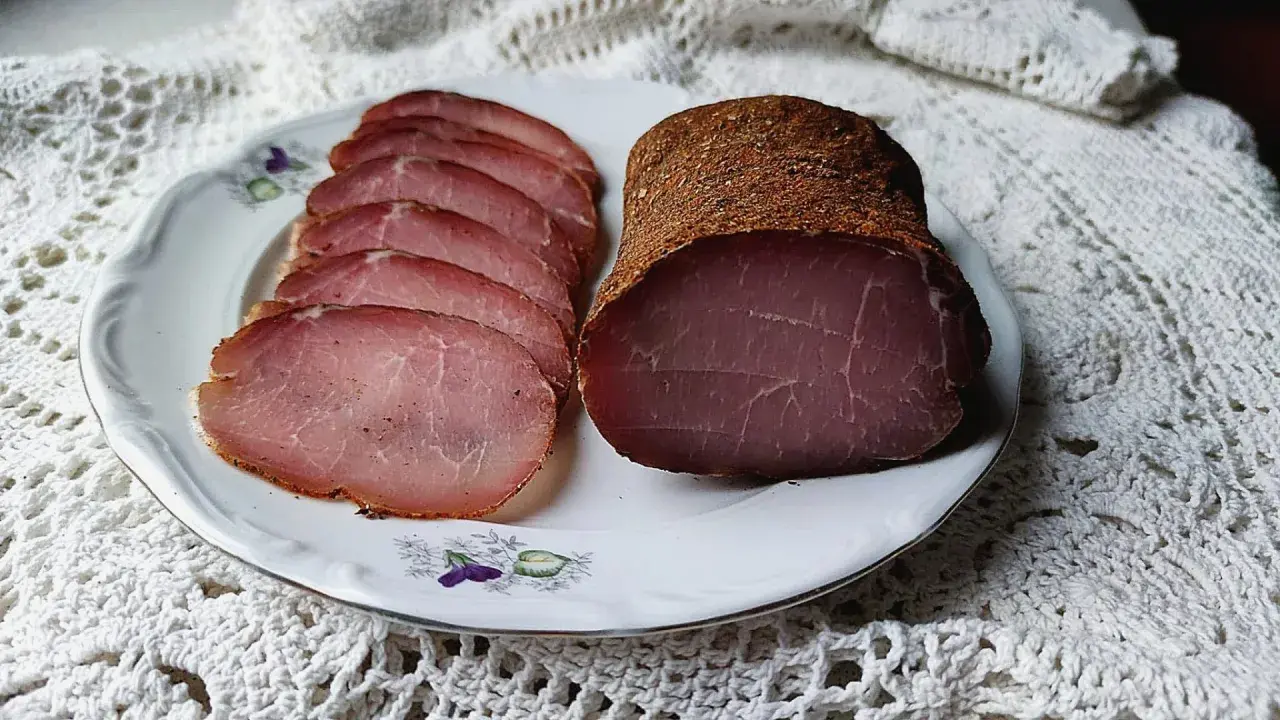
A well-made cured pork loin sits in a useful middle ground: leaner than many charcuterie staples, but more refined than a simple salty roast. In Basque-style eating, I like it because it carries a lot of flavour without needing much more than bread, peppers, cheese, or a glass of txakoli.
Here I break down what the meat actually is, how the cure changes it, what to look for when buying it in the UK, and how to serve or store it without flattening the character of the cut.
What to keep in mind before buying or slicing it
- The loin is naturally lean, so balance matters more here than in fattier cured meats.
- A good finish tastes savoury and clean, not sharply salty or brittle.
- Keep chilled products between 0 and 5 degrees Celsius and away from raw meat.
- Thin slicing changes everything; aim for 1-2 mm if you want the best texture.
- Basque-style serving works best with simple accompaniments, not heavy sauces.
- If you cure it at home, measure everything by weight and do not guess the salt.
What makes the loin so useful in charcuterie
This is pork from the loin, usually trimmed, salted, seasoned, and then dried until it firms up enough to slice wafer-thin. Because the cut is naturally lean, the finished meat stays cleaner and lighter than a fattier shoulder cure, which is why it sits so comfortably on a Basque-style board instead of feeling heavy.
When the cure is balanced, I get a savoury slice with a gentle sweetness from the meat itself, a bit of spice from paprika or pepper, and just enough fat to keep the texture from turning chalky. If the drying is too aggressive, that same cut becomes brittle fast, and there is no fat reserve to hide the mistake.
In Spanish kitchens, the closest reference point is lomo-style charcuterie, not breakfast bacon. That is the right mental model: a neat, sliceable meat with real flavour, but without the long, fatty richness of some other cured cuts.
How salt, time, and air change the texture
The curing process does two things at once: it seasons the meat all the way through and it lowers the amount of moisture available for spoilage. Salt is the backbone, but spices, drying time, and temperature control are what decide whether the result is elegant or merely salty.
| Style | What it does | What I expect from it |
|---|---|---|
| Salt and air-dry | Concentrates flavour and firms the texture slowly | Clean, savoury slices with a tidy finish |
| Spiced cure | Adds paprika, pepper, garlic, or herbs while the meat dries | A warmer, more rustic profile |
| Light smoke after curing | Adds aroma without changing the basic curing method | A deeper, more assertive finish |
Many traditional versions are taken down by roughly 25-30% of their starting weight before slicing, although that target can shift with the size of the piece and the style you are making. I care more about the feel of the loin than the calendar: it should be firm, evenly dried, and still slice without crumbling.
What to check when you buy it in the UK
When I shop for it in the UK, I want clarity more than drama. A good label tells me whether the product is air-dried, lightly smoked, or both, and I prefer a shorter ingredient list over a glossy description that hides the basics.
| What I look for | Why it matters |
|---|---|
| Firm, even colour | Usually signals controlled drying and a stable cure |
| Simple ingredients | Makes the flavour easier to read and avoids unnecessary processing |
| Clear storage instructions | Important once the pack is opened in a real kitchen |
| A little fat cap or modest marbling | Helps the lean cut stay supple instead of dry |
| Whole piece if possible | Holds texture better than slices that have already been exposed |
If I have a choice, I buy the whole piece and slice it myself. That gives me more control over thickness and lets me stop before the surface dries out. Pre-sliced packs are convenient, but they trade away texture every time the packet is opened.

How I would serve it on a Basque-style table
Basque serving is where this cut really earns its place. I slice it very thin, usually around 1-2 mm, and I let the platter sit out for 10 to 15 minutes so the aroma opens up without the texture going slack.
- Pan con tomate or grilled bread with olive oil keeps the focus on the meat.
- Charred piquillo peppers add sweetness and a little smoke.
- Idiazabal or another firm sheep's cheese gives the board a salty, creamy counterpoint.
- Txakoli, the bright Basque white wine, or dry cider keeps the palate fresh instead of weighing it down.
The rule I follow is simple: one sharp accent is enough. Heavy sauces, too much mustard, or a mountain of cheese make the slice disappear rather than shine.
How to store it safely and keep the slice clean
The food-safety part is not optional. The Food Standards Agency recommends keeping a fridge between 0 and 5 degrees Celsius, and that is the range I use for any chilled ready-to-eat meat once it is opened or sliced.
- Keep it covered and separate from raw meat and poultry.
- Use a clean board and knife if the meat will go straight to the table.
- Return leftovers to the fridge promptly instead of leaving them on the counter.
- Follow the pack's own instructions after opening if they are stricter than your usual routine.
- If the smell turns sour, the surface becomes sticky, or the flavour tastes wrong, throw it away.
That caution is not overkill. Chilled ready-to-eat foods can still support Listeria if the cold chain is sloppy, which is why temperature and hygiene matter even when the meat has already been cured.
If you want to make one at home, keep the method simple
If you want to make the style at home, keep the recipe disciplined. I would rather see a simple, well-measured cure than a crowded spice mix that tries to compensate for poor control.
| Stage | Typical range | What matters most |
|---|---|---|
| Salting and seasoning | 5-14 days | Use a scale and coat every surface evenly. |
| Drying or hanging | 2-6 weeks | Keep the environment cool, stable, and not overly dry. |
| Resting before slicing | 2-5 days | Let the salt equalise through the centre. |
When a recipe calls for nitrite, I treat it as a measured safety ingredient, not a flavouring I can eyeball. The Food Standards Agency notes that nitrite helps the cured flavour and helps suppress harmful microorganisms, so I follow the grams exactly and never guess by spoon.
- Weigh the meat first, then weigh the cure.
- Trim it evenly so the drying rate stays consistent.
- Do not chase speed; a rushed dry usually means a dull slice.
- Stop if the meat smells sour or develops a tacky surface that does not feel right for charcuterie.
The small details that decide whether it eats elegantly
The difference between a good slice and a forgettable one is usually small: a little less dryness, a little more patience, and a better idea of what should sit beside it on the plate. I want the meat to taste savoury and tidy, not aggressive.
For most households, a whole piece buys you more control: it slices better, holds flavour longer, and lets you choose between paper-thin shards for pintxos or slightly thicker slices for sandwiches. That flexibility matters more than people expect, especially with such a lean cut.
That is why I keep coming back to it: it rewards restraint. When I buy cured pork loin, I look for a clean cure, a firm but supple texture, and enough balance to make the slices disappear quickly rather than shout for attention.
