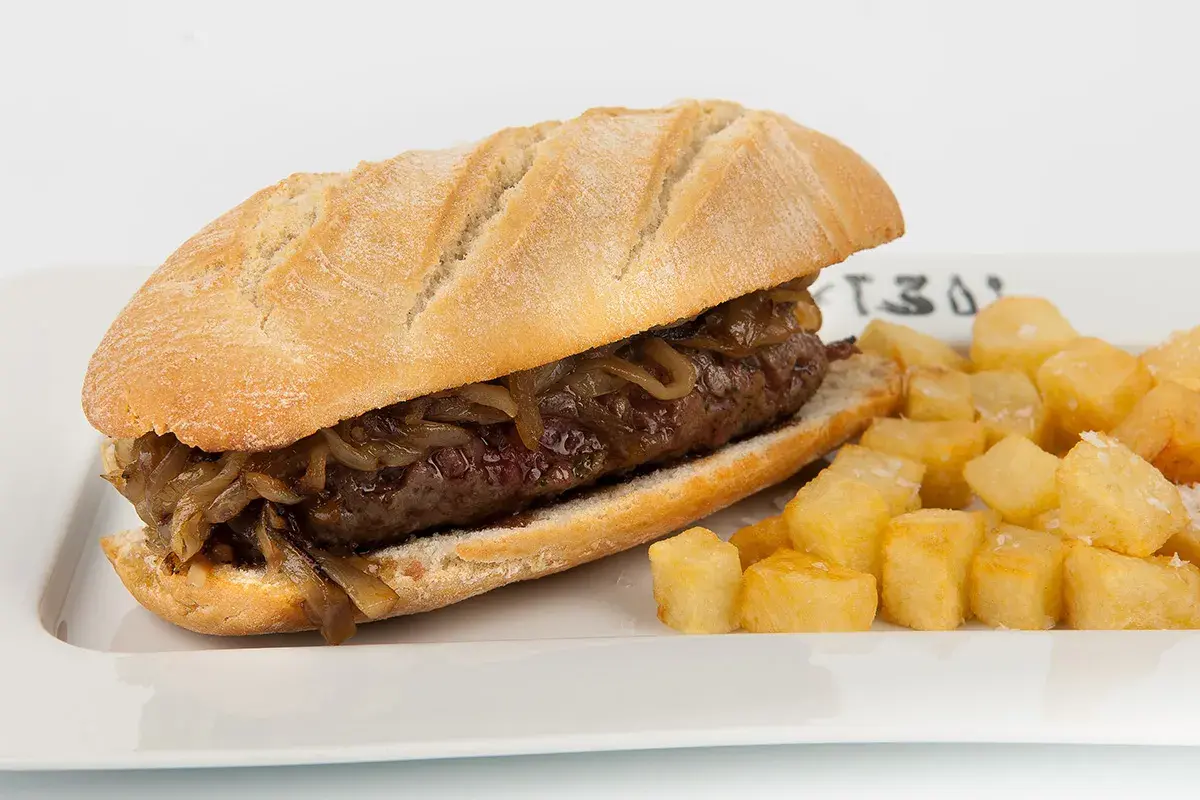
The simplest answer to what is a pepito is this: it is a Spanish-style sandwich, usually served hot and built around grilled beef in a crusty roll. In Basque tapas and pintxos culture, it sits in the practical middle ground: more substantial than a skewer snack, less formal than a full plated meal. I’ll break down the definition, the regional variations, and the details that matter if you spot it on a menu in the UK.
Key details to keep in mind before you order one
- A pepito is usually a hot sandwich, most often made with beef.
- The most familiar Spanish version is the pepito de ternera, or beef pepito.
- It is related to tapas culture, but it is not the same as a pintxo.
- The bread should support the filling without turning soggy or overly heavy.
- In the UK, you may see pepitos on Spanish, Basque, or modern bar-snack menus.
What a pepito actually is
The RAE definition is refreshingly plain: a pepito is a bocadillo with a meat fillet. In practice, that usually means a split roll or baguette filled with hot, simply cooked meat, most often beef, and dressed just enough to sharpen the flavour rather than bury it. When the meat is good and the bread is right, the sandwich feels bar-friendly and direct, not fussy.
That is why I would not lump it in with a generic cold sandwich. A pepito is usually cooked to order, eaten soon after it leaves the grill or plancha, and meant to taste of bread, meat, fat, and seasoning first. The best versions are restrained, which matters because once the filling gets too wet or too crowded, the balance collapses. That balance is exactly what separates it from other Spanish bar snacks.
Where the pepito comes from
Its exact origin story is a little messy, and I would treat any single neat tale with caution. The sandwich is clearly rooted in Spain, and the most established version is the pepito de ternera, which has long been associated with bars that cook food to order. Some stories link the name to Madrid, but the broader truth is simpler: the format survived because it is practical, quick, and easy to adapt.
What matters more than the anecdote is the culinary logic behind it. Spanish bar culture tends to reward food that can be cooked fast, eaten standing up or at the counter, and paired with a drink without slowing the room down. The pepito fits that rhythm neatly, which is one reason it keeps showing up on menus well beyond its original setting.

How it fits into tapas and pintxos culture
A pepito belongs to the same social world as tapas and pintxos, but it is not identical to either one. Tapas are a broad category of small savoury plates, while pintxos are typically bite-sized bar snacks from the Basque Country, often assembled on bread or skewered with a pick. A pepito, by contrast, is a sandwich: hand-held, hot, and usually more filling.
That difference matters because it changes how you eat it and when you order it. If you want a quick nibble with a drink, a pintxo is usually the lighter choice. If you want something that can stand in for lunch or bridge the gap between snacks, the pepito is the stronger option. Classic Basque pintxos such as a gilda or a small tortilla are about the bite; a pepito is about the small meal. In a good tapas bar, the menu may move fluidly between all three, and that is part of the charm rather than a contradiction.| Item | Typical form | How it feels on the table | Best use |
|---|---|---|---|
| Pepito | Hot sandwich with meat, usually beef | Substantial, handheld, and freshly made | Light lunch, shared bar food, quick dinner |
| Pintxo | Small bite, often on bread or a skewer | More delicate and usually smaller | One or two bites with a drink |
| Tapa | Any small savoury portion | Broadest category, from simple to elaborate | Sharing, grazing, or building a meal from several plates |
| Bocadillo | Spanish sandwich in a roll or baguette | Broader sandwich category | A fuller sandwich when size matters more than bar-snack style |
If you remember only one thing, make it this: pepitos are related to tapas culture, but pintxos are smaller and more defined by the bar-snack format. That distinction becomes useful the moment you start looking at ingredients, because the filling has to suit the role of the dish.
What goes inside a good pepito
The classic filling is grilled or seared beef, and the meat should be tender enough to bite through cleanly. A strong pepito does not need much more than salt, pepper, and a little fat from the cooking process, although many modern versions add onions, peppers, cheese, or a sauce. The point is not to turn it into a heavily loaded sandwich; it is to keep the meat front and centre.
I would pay the most attention to three things:
- Bread should be sturdy enough to hold juices without becoming chewy in the wrong way.
- Meat should be sliced or cooked thin enough to stay tender and easy to eat.
- Acidity or salt from peppers, pickles, or a sharp sauce can brighten the sandwich, but too much overwhelms it.
In the UK, chefs often adapt the idea with sirloin, rump, or thin steak strips because those cuts are easy to source and cook quickly. That works well as long as the bread and seasoning keep pace; otherwise the sandwich reads as just another steak baguette, and the pepito identity gets lost.
How to order or make one without losing the point
If you see pepito on a menu in a UK tapas or Basque-inspired restaurant, I would ask one simple question first: is it being treated as a hot sandwich or as a small bar snack? That tells you a lot about size, bread, and the amount of filling. A kitchen that understands the dish usually keeps the build tight and the meat freshly cooked.
When ordering, a few practical checks help:
- Ask whether the meat is cooked to order, especially if you prefer beef medium rather than well done.
- Check whether the bread is toasted lightly or served soft, because that changes the texture a lot.
- Find out whether there is a sharp component, such as pickled pepper, onion, or alioli, to balance the richness.
- If you are sharing, treat a pepito as the “more substantial” item on the table rather than as a one-bite add-on.
For drinks, I would lean toward something crisp and dry: txakoli if the restaurant pours it, dry cider, a clean lager, or a dry white wine. For a home version, I would keep it stripped back: good bread, seasoned beef, and one or two accent ingredients. That approach is more faithful to the spirit of the dish than piling on five sauces and calling it improvement. From there, it is easier to see why the pepito sits so comfortably beside tapas rather than outside them.
Where the pepito can surprise people
The biggest surprise is that the word does not always point to a single rigid recipe. In some places, pepito can also refer to different sandwich styles, and in Spanish menus the term may be used a little more loosely than a visitor expects. That is normal in food culture: names travel, local habits reshape them, and a dish survives because cooks keep finding useful versions of it.
There is also a second meaning in Spanish that has nothing to do with savoury food: a pepito can be a sweet filled bun or pastry. If you are eating in a bakery, that matters; if you are in a tapas bar, it usually does not. Context is everything, and the menu setting will usually tell you which version you are dealing with before the first bite arrives.
What I would look for in a good pepito on a menu
The strongest pepitos are not the biggest ones. They are the ones where the bread, meat, and seasoning feel designed to work together rather than compete for attention. A good kitchen usually gets three details right: the meat is hot and properly seasoned, the bread has enough structure to hold up, and the sandwich arrives soon enough that the crust still has some life in it.
- The filling tastes freshly cooked rather than reheated.
- The bread is supportive, not dense or stale.
- There is enough salt and acidity to keep the beef lively.
- The sandwich feels balanced rather than overloaded.
When those things line up, the dish does what it should do: it gives you a compact, satisfying taste of Spanish bar culture without asking you to sit through a formal meal. That is why I think the pepito is worth knowing, especially if you enjoy tapas and pintxos but want something a little heartier. It is a simple idea, but the best simple ideas usually are.
