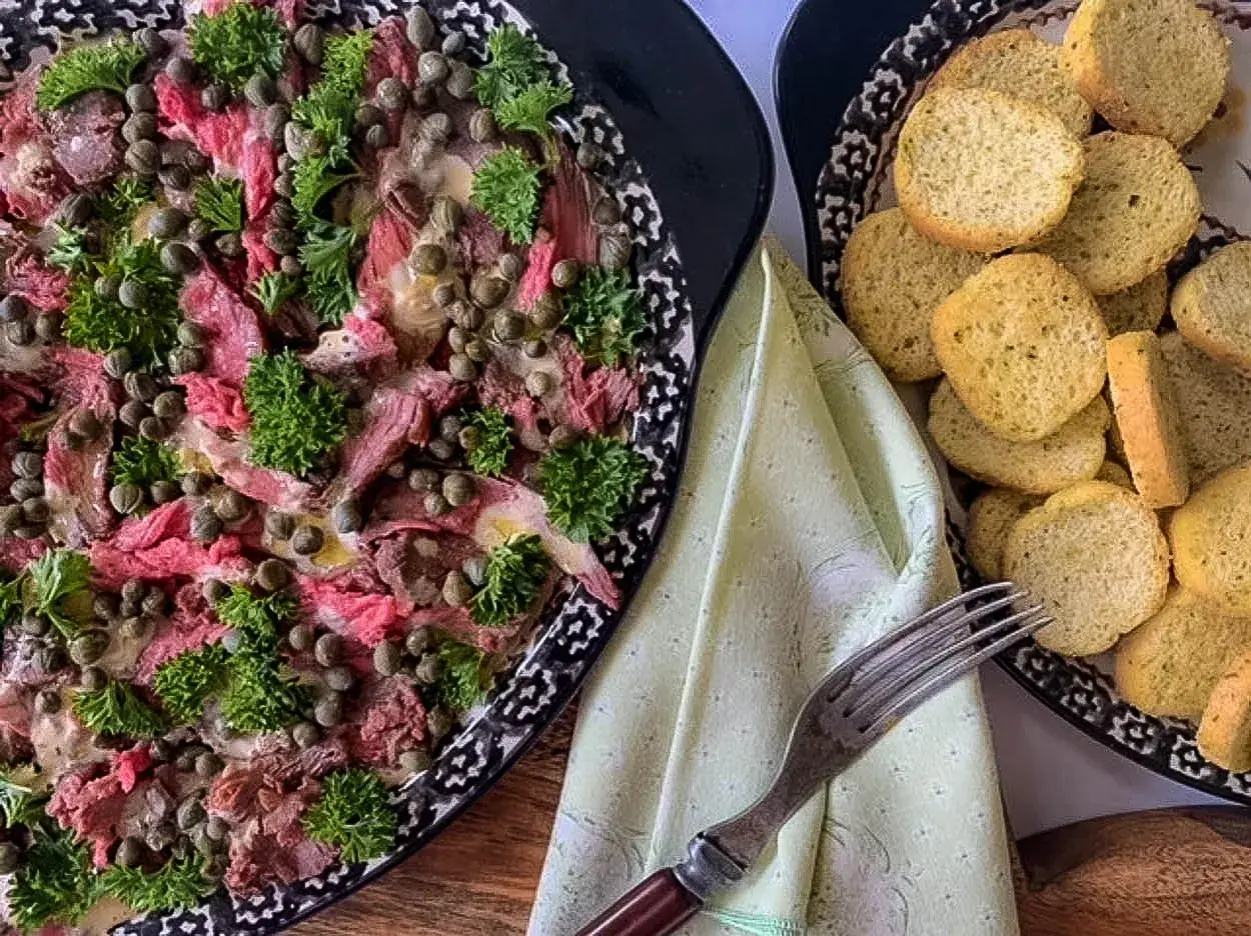
A good beef carpaccio is all about restraint: paper-thin slices, clean seasoning, and just enough acidity to wake up the beef without smothering it. In a tapas or pintxos setting, that balance matters even more, because the plate has to feel intentional, easy to share, and sharp enough to hold its own beside pickled vegetables, cured fish, and bread-based bites.
The dish works best when the beef stays cold, the garnish stays sharp, and the plate stays small.
- Use a whole-muscle cut with good marbling and a clean, fresh smell.
- Chill the meat properly before slicing so the cuts stay thin and tidy.
- Keep the garnish focused: oil, acid, salt, and one or two savoury accents.
- For a tapas-style service, plan small portions and serve immediately.
- Raw beef is not for everyone, so guest safety should be checked before plating.
What makes it fit a Basque small-plates menu
I like this dish in a Basque context because it respects the same principles that make good pintxos work: precision, quality ingredients, and a clear flavour idea. A plate of raw beef does not need much to feel complete, but it does need discipline; once the meat is sliced, every extra topping has to earn its place.
That is also why it feels more natural on a small-plates menu than it does as a heavy starter. The portion stays modest, the seasoning stays bright, and the diner can move from one bite to the next without feeling weighed down. In practice, that is exactly what I want from a tapas-style opener: something elegant, quick to eat, and memorable without being noisy.
It is not one of the old, classic Basque bar staples, but it fits the format well. The logic is the same as with the best pintxos: build a small dish around a strong central ingredient, then use acidity, salt, and texture to sharpen it rather than bury it.
Choose the cut carefully and keep the prep cold
The cut matters more here than in many cooked beef dishes. I would choose a whole muscle piece such as sirloin or tenderloin, because both slice cleanly and give you a soft, elegant texture. Sirloin tends to bring a little more flavour; tenderloin is milder and more delicate. Either works, but only if the meat is genuinely fresh and handled with care.
| Cut | Texture | Flavour | Best use |
|---|---|---|---|
| Tenderloin | Very soft | Subtle | Clean, classic presentation |
| Sirloin | Firm but tender | More beefy | A stronger flavour profile |
| Rump or topside | Can be leaner and firmer | Decent if well sourced | Only if you know the butcher and the cut is carefully trimmed |
For slicing, I prefer to chill the beef until it is very firm, almost on the edge of partly frozen. That gives you control with a sharp knife and helps the slices stay thin. I am not trying to make the meat icy; I am trying to make it stable enough to cut without tearing.
- Trim away sinew and any obvious surface fat before chilling.
- Use a clean board and a long, sharp knife.
- Do not wash raw meat; the Food Standards Agency advises against it because it can spread bacteria around the kitchen.
- Keep the meat covered and refrigerated until the last possible minute.
- If the dish is for a mixed table, remember that the NHS advises pregnant people to avoid raw or undercooked meat.
Once you have the cut and the handling right, the rest becomes much easier. The flavouring then has room to work, which is where the dish starts to feel complete rather than just technically correct.
Build the flavour around balance, not decoration
The best version of this kind of starter is not overloaded. I think of the garnish as a set of supporting lines, not a performance. Olive oil gives the meat gloss, acid wakes it up, salt sharpens it, and a savoury element adds depth. That is enough.
In a Basque-leaning version, I would happily use a few shavings of Idiazabal for a smoky, local note. If you want a more familiar restaurant style, Parmesan works too. The point is not the cheese itself; the point is the umami, which is the savoury depth that makes the beef taste fuller.
| Element | What it adds | How much I would use |
|---|---|---|
| Extra-virgin olive oil | Body and shine | 1 to 2 teaspoons per plate |
| Lemon juice or sherry vinegar | Brightness | A few drops, then taste |
| Capers or finely chopped pickled onion | Salt and bite | About 1 teaspoon |
| Idiazabal or Parmesan shavings | Umami and texture | 5 to 8 thin shavings |
| Rocket or watercress | Peppery freshness | A small handful |
| Toasted bread | Structure | 1 or 2 small pieces per person |
I would avoid heavy sauces, creamy drizzles, or anything that turns the beef into a backdrop. A little mustard in the dressing can work, especially if you want a sharper pintxos feel, but it should stay in the background. The beef should still taste like beef.

How to plate it like a tapas or pintxos dish
For a tapas-style starter, I usually plan on around 60 to 90 grams of beef per person. If the dish is part of a larger pintxos spread, 30 to 40 grams is often enough. That keeps the portion light and lets the table move on to other bites without the meal feeling repetitive.
Plating should be simple. Fan the slices so they overlap slightly, season lightly, then finish with the acid and garnish. If you are using bread, make it thin, toasted, and small enough to pick up in one or two bites. In a pintxos setting, I like the base to stay discreet so the meat stays the focus.
- Chill and slice the beef as thinly as possible.
- Lay the slices on a cold plate in a single, even layer.
- Season with flaky salt and black pepper.
- Drizzle on oil and just a little acid.
- Finish with capers, herbs, cheese shavings, or a few leaves of rocket.
Timing matters more than fancy technique. I would assemble the plate at the last moment so the meat stays glossy and the seasoning does not sink into the flesh. For drinks, a dry txakoli is the obvious Basque answer, but a crisp cider or a sharp white wine also fits well in the UK. If the rest of the spread leans richer, that acidity becomes even more useful.
The mistakes that flatten the texture and flavour
Most disappointments come from overthinking or under-preparing. Thin raw beef is unforgiving, but it is also easy to get right once you stop trying to make it into something else. I see the same errors again and again, and they all have the same effect: they dull the beef rather than support it.
| Mistake | What goes wrong | Better approach |
|---|---|---|
| Slicing too thick | The texture turns chewy and heavy | Chill the beef more and use a long, sharp knife |
| Overdressing | The meat loses its clean taste | Dress lightly, then adjust at the table if needed |
| Too many toppings | The flavours blur together | Choose one salty, one acidic, and one fresh element |
| Serving it warm | The fat softens too much and the plate feels flat | Keep the plate chilled and serve quickly |
| Ignoring guest restrictions | Some people should not eat raw meat at all | Offer a cooked alternative starter alongside it |
The other trap is trying to hide a mediocre cut under garnish. That never really works. If the beef is pale, tired, or poorly sourced, no amount of capers will rescue it. I would rather serve a smaller plate of genuinely good meat than a larger one that needs help at every bite.
A small Basque-inspired version I would serve at home
When I want this to feel at home on a pintxos-minded table, I keep the formula tight and repeatable. The plate below is simple, but it has enough contrast to feel finished.
- Very thin slices of chilled sirloin or tenderloin
- Extra-virgin olive oil
- A few drops of lemon juice or sherry vinegar
- Flaky sea salt and black pepper
- Capers or finely chopped pickled onion
- Shavings of Idiazabal or a similar hard cheese
- Small toasted bread slices or crisp bread
- A few rocket or watercress leaves
I like to assemble it so the bread is there for support, not to dominate the plate. If I want a slightly more Spanish accent, I add a touch of smoked paprika to the oil, but I keep it light. The goal is not to turn the dish into a collage; it is to make each bite feel clean, bright, and deliberate.
If you keep the beef cold, the seasoning sharp, and the garnish modest, the dish will feel like a small luxury rather than a fussy exercise. That is why beef carpaccio belongs so naturally in a tapas-minded menu: it is quick to eat, easy to portion, and at its best when every ingredient has a job.
