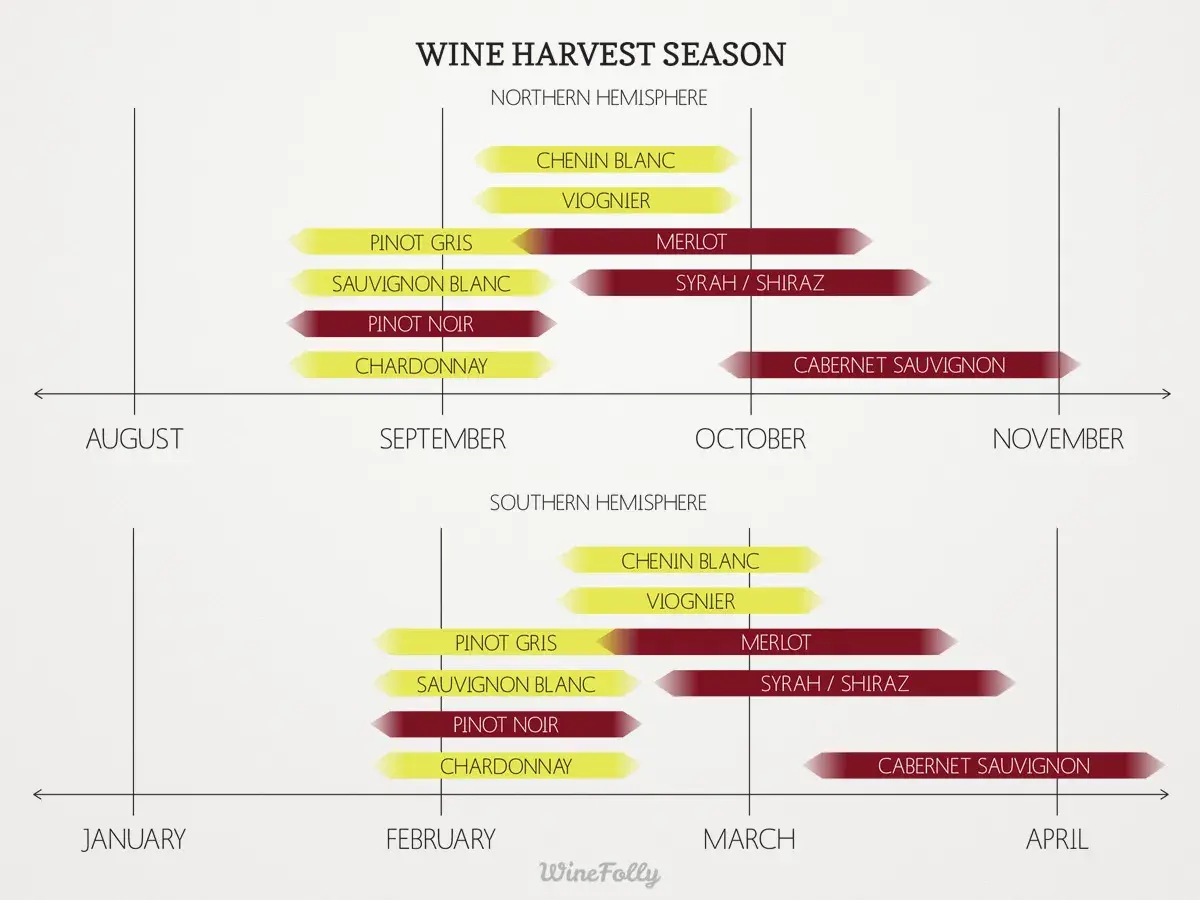
The grape season in the UK is less a fixed date than a moving target shaped by weather, variety, and the style of wine a grower wants to make. For drinkers, that timing explains why some bottles feel sharper and more energetic, while others taste rounder and richer. I’ve written this to show when grapes are usually ready, how harvest decisions are made, and what that means at the table.
The main things to keep in mind
- In the UK, grapes usually ripen from late summer into mid-autumn, but the exact harvest window shifts with weather and variety.
- Growers do not pick by calendar alone; they check sugar, acidity, aroma, and berry texture before cutting.
- Earlier-picked fruit usually gives brighter, leaner wines, while later-picked fruit can bring more body and softer acidity.
- Fresh seasonal grapes should feel firm, dry on the stem, and clean in smell, with no split skins or sticky patches.
- For food, the safest matches are bright wines with salty or fried dishes and richer wines with roast or cheese-led plates.

When grapes are actually ready in the UK
The RHS puts grape harvest time from August to November, which is a useful reminder that the calendar only gives you a rough frame. In practice, the UK usually moves through the season in waves: the earliest fruit comes first, then the main wine grapes, and finally later-ripening bunches if the weather stays kind. A warm summer can pull picking forward by weeks, while a damp finish can slow everything down and make the final call much more cautious.
| Fruit or style | Typical UK window | What it means in practice |
|---|---|---|
| Early-ripening sparkling fruit | Late August to late September | Picked for freshness, lift, and high natural acidity |
| Main white-wine grapes | September to early October | Balanced fruit, perfume, and enough acidity to keep the wine bright |
| Cool-climate red grapes | Late September to October | Picked later if the year allows, to soften tannins and build flavour |
| Table grapes | August to November | Judged more by sweetness and texture than by winemaking balance |
That range is why I treat harvest as a moving decision rather than a date on the wall. Once you understand the ripening window, the next question is obvious: what exactly are growers measuring before they start cutting?
How growers decide the picking day
I never think of harvest as a single moment chosen on instinct. Good growers sample repeatedly, taste the berries, and check the numbers that tell them whether the fruit is ready for wine or still needs time. The three most important signals are easy to explain, even if the chemistry behind them is not.
- Sugar tells the winemaker how much fermentable sweetness is in the berry juice and, indirectly, how much alcohol the finished wine may carry.
- Acidity gives the wine freshness and shape; if it falls too far, the result can taste flat.
- Phenolic ripeness is the readiness of skins, seeds, and tannins, and it matters most for red wines because it affects texture and bitterness.
- Aromatic development shows whether the fruit tastes complete, not just sweet.
- The weather forecast can overrule everything else if rain, rot, or a cold snap is close enough to damage the crop.
On a practical level, this is why two vineyards a few miles apart can pick on different days, even in the same year. One site may have enough sun to let the grapes hang longer; another may need to move quickly to preserve clean flavour and avoid disease pressure. That difference matters because ripeness does not just change when fruit is picked, it changes what the wine becomes.
What ripeness does to the wine in your glass
When I taste young wines, I pay attention to the direction of the harvest decision. Early picking usually produces a tighter, sharper profile with citrus, green apple, herbs, or stone fruit. Later picking brings riper fruit, a softer edge, and more weight on the palate, but it can also reduce the brightness that makes cool-climate wine so useful at the table.
| Picking choice | Likely style | Best use |
|---|---|---|
| Earlier harvest | High acidity, lean texture, crisp fruit | Sparkling wine, brisk whites, and dishes that need cut and lift |
| Balanced harvest | Fruit, acid, and body in the middle | Most still whites and lighter reds |
| Later harvest | Riper fruit, softer acidity, fuller mouthfeel | Richer reds, late-release bottles, or sweeter styles |
That is the quiet logic behind many English and Welsh wines: the cooler climate preserves acidity, so the best wines often feel precise rather than heavy. Once you know that, it becomes much easier to choose both grapes and bottles with confidence, which is the next practical step.
How I choose grapes and bottles during the season
For fruit, I look first at shape and surface. Good bunches feel firm, not soft or soggy; the stems should look dry and healthy, and the skins should have a natural bloom rather than a sticky shine. A little white bloom is normal and usually a good sign, because it shows the fruit has not been handled roughly.
- Choose bunches with berries that feel plump but still firm.
- Avoid crushed fruit, split skins, or damp patches that smell fermented.
- Look for stems that are greenish or dry rather than blackened or brittle.
- Prefer fruit with an even colour for the variety, not mixed shades caused by uneven ripening.
- If the berries are going to be eaten fresh, taste matters more than size; sweet, aromatic fruit is usually the better buy.
Pairings that make the harvest feel like a meal
Seasonal grapes and wine make more sense when they are treated as part of a menu rather than as a standalone tasting note. In a Basque setting, that usually means salt, smoke, oil, seafood, peppers, and cheese doing most of the work. The wines that fit best are the ones that either refresh the palate or add enough roundness to meet the dish halfway.
| Wine style | Basque-style pairing | Why it works |
|---|---|---|
| Crisp sparkling wine or txakoli | Pintxos, fried anchovies, croquetas | The acidity cuts through salt and oil without flattening the flavour |
| Aromatic white | Grilled hake, clams, green peppers | It keeps the plate bright and echoes the freshness of the seafood |
| Light red | Mushrooms, roast chicken, chorizo | There is enough fruit to stand up to the dish without overwhelming it |
| Late-harvest sweet wine | Idiazabal, blue cheese, almond cake | Sweetness softens salt and richness, which makes the finish feel cleaner |
The pattern is simple: the fresher the grapes, the sharper the wine, and the lighter the dish should feel. Once that balance is right, the last thing I watch is not flavour at all, but timing and weather.
What I would watch as the first bins arrive
When harvest begins, the best growers stop talking in broad terms and start reacting to what is actually in the bins. A single week of warm, dry weather can change sugar levels quickly, but only if the nights stay cool enough to protect acidity. That balance is fragile, and it is one reason harvest can feel calm one day and urgent the next.
- Do not assume the earliest fruit is the best fruit; it is often just the first fruit that reached balance.
- Expect picking to happen in several passes, not all at once.
- Judge freshness by aroma, texture, and acidity, not by colour alone.
- Be careful with late fruit in wet weather, because rot risk can rise fast.
- For bottles, trust the style more than the label hype; the right wine for the season is usually the one that matches the food in front of you.
That is the real lesson of the harvest window: it is not just a farming detail, but the point where weather, ripeness, and taste all meet. If you keep your eye on acidity, aroma, and the pace of the year, you will read the season far better than you would from the calendar alone.
