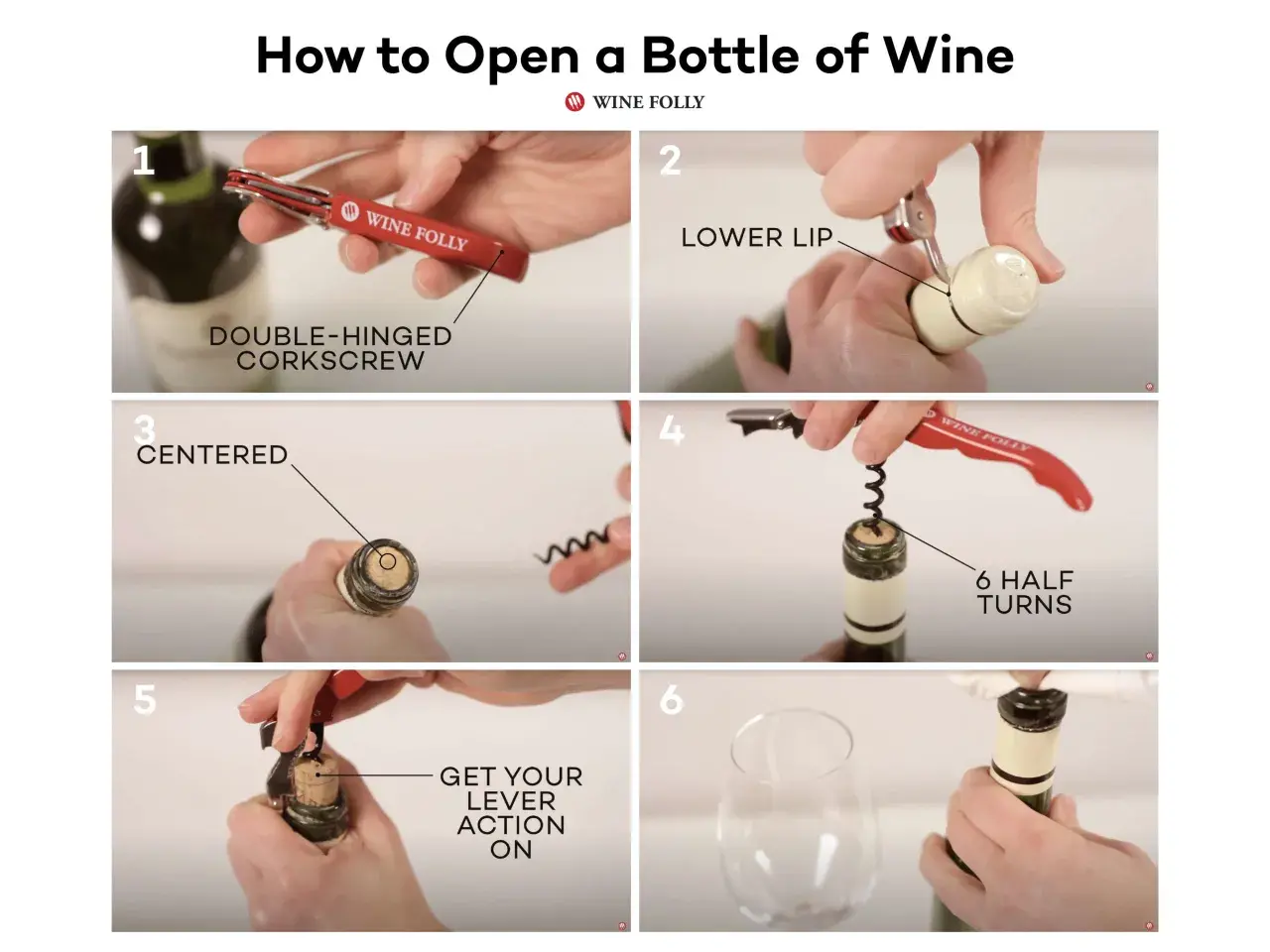
Opening a bottle should be quick, clean, and controlled. Knowing how to open a wine bottle cleanly matters because the right approach protects the cork, keeps the glass steady, and makes the pour look intentional. This guide is for still wine; sparkling bottles need a different release because pressure changes the technique. I prefer the same method whether I am serving a casual supper or a Basque-inspired meal where the table should stay relaxed and unhurried.
These basics make opening the bottle cleaner and safer
- Check the closure first: screw cap, natural cork, or synthetic cork all behave differently.
- A waiter’s corkscrew is the most reliable all-round tool for corked bottles.
- Twist straight, lift in stages, and stop before the cork starts to shear.
- If you have no opener, the safest emergency option is to push the cork in with a long, narrow utensil.
- Older bottles often need more patience and sometimes an Ah-So style opener.
Start with the closure, not the opener
Before I reach for any tool, I look at the top of the bottle. Many everyday wines now come with screw caps, and those should simply twist open by hand. Corked bottles need a different approach, while synthetic corks, which are made from man-made material rather than bark, usually behave like cork but often need a firmer pull.
This matters because the closure tells you what kind of resistance to expect. A screw cap should move smoothly. A natural cork should rise evenly. A synthetic cork may feel stubborn at first, but it should not crumble the way an old cork can.
That quick check saves time and prevents the one mistake I see most often: using brute force on a bottle that only needed the right motion.

Use a waiter’s corkscrew for the cleanest result
This is the tool I trust most often. It is compact, precise, and easy to control, which is why it works so well at a dining table or in a busy kitchen.
- Cut the foil just below the lip of the bottle and lift the top away cleanly.
- Set the tip of the worm, the spiral screw, in the center of the cork and turn it in until only one coil remains visible.
- Brace the first lever step on the bottle lip and lift the cork halfway out.
- Move to the second lever step and finish the pull with slow, even pressure.
- Remove the cork by hand, then wipe the neck before pouring.
The important detail is control. Keep the bottle still, keep the worm straight, and let the lever do the work. Do not twist the bottle around the corkscrew; that is how corks start to tear and glass starts to wobble.
If the cork resists, pause and reset the angle instead of forcing the pull. A clean uncorking takes seconds when the screw is centered properly, and that is exactly why the waiter’s corkscrew remains the standard in professional service.
Open the bottle safely when there is no corkscrew
Emergency methods exist, but I treat them as a backup, not a habit. The safest option for a standard still wine is to push the cork into the bottle with the handle of a wooden spoon or another long, narrow utensil.
- Wrap the neck in a towel so the bottle is easier to hold.
- Work over a sink or tray in case the cork slips.
- Press slowly and steadily until the cork drops below the neck.
- Pour carefully, because the cork can move inside the bottle as you tilt it.
I do not recommend keys, knives, shoes, or other improvised tricks. They may work in a video clip, but they are poor choices at an actual table. They create more mess, more risk, and usually less dignity than waiting for a real opener.
If you are hosting and want the bottle to feel graceful rather than improvised, borrow a proper opener before you start. That small decision changes the whole experience.
Handle brittle corks and awkward bottles without drama
Older wine and badly stored bottles are where uncorking gets difficult. A dry cork can crumble. A swollen cork can stick. A bottle with fragile glass or damaged foil can make even a good opener feel awkward.
When the cork starts to break
Stop pulling as soon as you see the cork tearing unevenly. Re-center the worm if needed and use smaller turns. If the top section breaks off, work on the remaining solid part rather than yanking harder. If crumbs fall into the neck, pour through a fine sieve or a clean decanter spout instead of trying to fish them out with the opener.
When the cork feels stuck
Rock the cork only after it has been lifted slightly. If it still refuses to move, an Ah-So opener, a two-prong tool that slides between the cork and the glass, can grip the sides of the cork instead of piercing the center. That makes it especially useful for older bottles with fragile corks.
Read Also: Gewürztraminer Pairing Guide - Unlock Its Full Flavor Potential
When the bottle has been stored for a long time
Keep it upright for a short while before opening if possible. That gives sediment time to settle near the base, which is useful if you plan to decant. I also like to move slowly with these bottles, because old glass and brittle closures rarely reward speed.
The rule is simple: use the least force that gets the job done. In wine service, patience usually looks better than strength.
Choose the opener that fits how you actually drink wine
Not every opener suits every setting. Some are made for portability, some for speed, and some for bottles that are already giving trouble. I would rather choose the right tool once than fight with the wrong one every time.
| Opener type | Best for | What it does well | Where it falls short |
|---|---|---|---|
| Waiter’s corkscrew | Everyday corked bottles and table service | Compact, reliable, and precise | Needs a little technique |
| Winged corkscrew | Quick home use | Easy to understand at a glance | Bulkier and less elegant on the table |
| Lever opener | Frequent opening with minimal effort | Strong leverage and fast operation | Takes more storage space |
| Electric opener | Low-effort opening | Useful for people who want a simple push-button motion | Needs charging or batteries |
| Ah-So opener | Older or fragile corks | Grips the cork without piercing it | Less familiar if you have never used one |
If I were setting up a small home bar or a restaurant sideboard, I would keep a waiter’s corkscrew first and an Ah-So second. That combination covers most bottles without taking up much space.
Keep a small service kit ready before the bottle reaches the table
The easiest uncorking is the one that looks effortless because the setup was right from the start. When I am preparing a bottle for dinner, I like to have a clean napkin, a decent opener, and a stable surface within reach. That small bit of preparation keeps the moment relaxed, especially when the table is already busy with food and conversation.
- Keep a napkin nearby to grip the bottle and wipe the neck.
- Leave enough room to pull the cork straight out without bumping plates or glasses.
- Pour a small taste first if you want to check the wine before serving everyone.
- Replace worn corkscrews before the worm starts slipping or bending.
For me, that is the real answer to opening wine well: match the closure, choose the right tool, and stay calm if the cork needs a second attempt. Once that becomes a habit, uncorking stops being a task and starts feeling like part of the meal.
