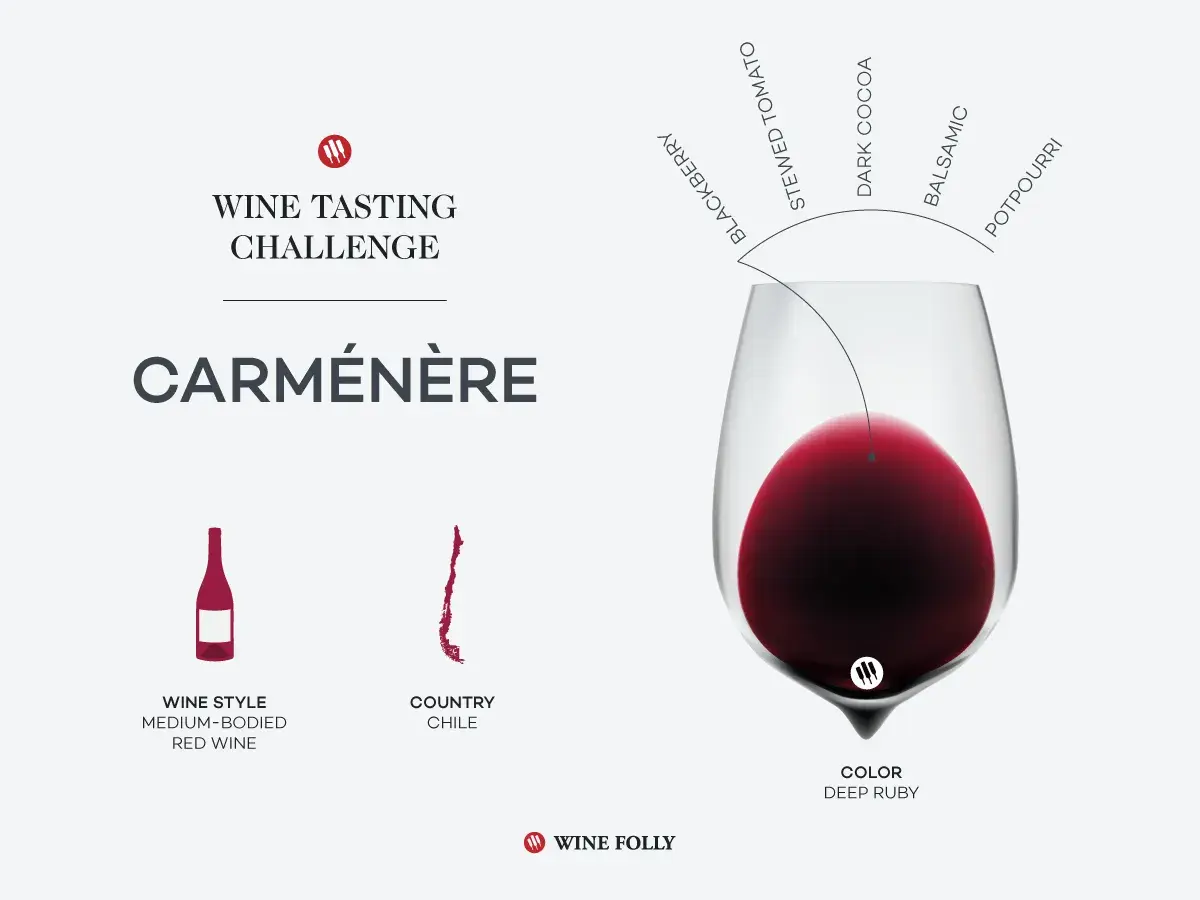
Carménère sits in an interesting place in the red-wine world: old Bordeaux heritage, modern Chilean identity, and a flavour profile that can make a dinner feel more deliberate without becoming heavy. This article covers where carmenere wine comes from, what it tastes like, how to choose a good bottle in the UK, and which foods it flatters most, especially if you like a table with grilled, smoky, or peppery dishes.
The short version on Carménère
- Origin: It began in Bordeaux, France, but today Chile is the main reference point for the grape.
- Style: Expect dark fruit, soft tannins, and a savoury green-pepper or herb note when the wine is well made.
- Best use: It shines with grilled meat, roasted vegetables, mushrooms, and dishes with pepper, smoke, or paprika.
- Buying tip: In the UK, many decent bottles land around £10 to £18, with better single-vineyard wines often higher.
- Serving tip: Serve it slightly cool, not room-warm, and decant denser bottles if they feel tight.
Why this Bordeaux grape feels so different now
Carménère is one of those grapes that makes more sense once you know the backstory. It was originally part of the Bordeaux family, but after disease and changing vineyard patterns, it almost disappeared from its French home. For a long time, it was better known in Chile, where it was mistaken for Merlot until DNA work cleared up the confusion in the 1990s.
That history still matters because it explains why the grape can feel familiar and unusual at the same time. It shares Merlot’s sense of softness and approachability, yet it often brings more herbal detail, darker fruit, and a little more savoury grip. In practical terms, that means it can behave like a red wine with more shape than Merlot, but less hardness than Cabernet Sauvignon.
| Wine style | What it usually feels like | How Carménère differs |
|---|---|---|
| Merlot | Plush, round, fruit-led | Carménère is often more savoury and peppery |
| Cabernet Sauvignon | Structured, firmer, more tannic | Carménère is usually softer and less stern |
| Malbec | Dark-fruited, juicy, sometimes smoky | Carménère leans more herbal and less plush in the mid-palate |
That combination is the reason I think the grape is easier to enjoy than many people expect. Once you understand the shape of it, the tasting notes start to make sense rather than feeling random. From there, the real question becomes what you should expect in the glass.
What it tastes like in the glass
The best Carménère usually leads with ripe blackberry, black plum, and black cherry, then moves into a savoury register. I often look for notes of green peppercorn, bay leaf, smoked paprika, cocoa, or dried herbs. When the fruit is ripe and the vineyard work is careful, those herbal notes feel like seasoning. When the grapes are picked too early, they can turn sharp and unbalanced.
This is where the technical term pyrazines comes in. Pyrazines are aroma compounds that can create green-pepper, herb, or leafy notes in wine. In Carménère, they are part of the signature, but the trick is balance. I want a wine that tastes like a ripe red with a savoury edge, not like a vegetable patch in disguise.
Body and tannin matter too. Good bottles are usually medium to full-bodied with tannins that feel polished rather than aggressive. That makes the wine versatile at the table, because it has enough structure to stand up to food but not so much that it crushes delicate flavour. If you like reds that are aromatic but not overly heavy, this is one of the more reliable options.
Climate shifts the style more than many shoppers realise. Warmer sites tend to give fuller fruit, softer edges, and a slightly richer finish. Cooler or less perfectly ripened fruit can push the wine toward more green notes, which some drinkers enjoy and others will not. That difference is the key to buying well, especially when you are looking at bottles in the UK.

The foods I trust most with it, from Basque plates to grilled meat
Food pairing is where Carménère earns its keep. I reach for it when a dish has char, smoke, peppers, mushrooms, roasted vegetables, or a bit of spice. That makes it a strong fit for Basque cooking, where you often get exactly those elements on the same plate: grilled meats, peppers, garlic, tomato, anchovy, and serious flavour without unnecessary heaviness.
It also works because the wine has enough fruit to cushion salt and smoke, while the savoury notes echo the cuisine instead of fighting it. A bright, acid-driven white is better for some seafood dishes, but Carménère can be surprisingly good with richer fish if the sauce has enough depth.
| Dish | Why it works | What to watch for |
|---|---|---|
| Grilled txuleta or ribeye | Smoke, char, and fat line up with the wine’s fruit and tannin | Choose a bottle with ripe fruit, not aggressive green notes |
| Piperade or pepper-based vegetable dishes | The wine echoes pepper, tomato, and herbs naturally | Too much oak can crowd the dish |
| Chorizo or smoked sausage | Smoky spice meets dark fruit very neatly | Avoid very sweet sauces |
| Roasted mushrooms | Earthy notes connect well with the savoury side of the grape | Use a bottle with enough freshness so it does not feel flat |
| Bacalao with paprika or tomato | Salt, spice, and tomato can support the wine better than plain fish | Keep the wine medium-bodied rather than heavy |
| Idiazabal or other firm cheeses | Salt and texture tame the tannins and bring out the fruit | Very creamy cheeses can make the wine feel sharper |
If I had to give one practical rule, it would be this: the more the dish leans toward grill, smoke, pepper, or roast, the better Carménère usually behaves. That naturally leads to the next question, which is how to spot a good bottle before you pay for it.
How I would choose a bottle in the UK
For UK buyers, the first thing I look at is price. In 2026, a sensible entry point is often around £8 to £12, where you can find straightforward, enjoyable bottles for weeknight drinking. Between £12 and £18, the wines usually become more polished, with better balance and more detail. Once you move above £18, you should expect more concentration, better texture, or a single-vineyard feel that gives the grape room to breathe.
Region matters too. Chile remains the safest bet because that is where the grape has really found its voice. Names such as Colchagua, Cachapoal, Maule, and the wider Central Valley often signal warmth and ripeness, which is helpful if you want the dark-fruited side of the grape. If the bottle is a blend rather than a varietal wine, check what Carménère is adding. It should bring savoury lift or mid-palate depth, not just a vague red-wine label.
| Label cue | What it usually suggests | My take |
|---|---|---|
| Reserva | Often a step up from basic entry level, usually with a bit more oak or concentration | Good for casual dinners if the price stays sensible |
| Single vineyard | More specific site expression and often better precision | Worth paying extra if you want nuance |
| Central Valley or warm Chilean region | Riper fruit and softer texture | Best starting point for most drinkers |
| High oak influence | More smoke, vanilla, or toast | Can work, but too much oak can bury the grape’s savoury character |
I also pay attention to what the bottle promises stylistically. If I want something easy and generous, I look for ripe fruit and moderate alcohol rather than a wine that sounds aggressively herbal. If I want a food wine, I am happy to let the savoury notes show more, because they become an advantage at the table. That is why serving temperature matters more than many people think.
How to serve it so the wine stays balanced
Carménère is easy to spoil with the wrong temperature. Too warm and the alcohol can push forward, making the wine feel broader and less precise. Too cold and the fruit tightens up, leaving only the herbal edge. I like to serve it slightly below room temperature, roughly 16 to 18°C, which is cool enough to keep the wine fresh but warm enough to let the fruit speak.
Decanting depends on the bottle. A younger, denser wine with noticeable oak or firm structure often benefits from 30 to 60 minutes in a decanter. That bit of air can soften the edges and let the darker fruit come forward. A lighter, more straightforward bottle may not need it at all. If in doubt, pour a small glass first and taste after ten minutes; Carménère can change quite quickly once it opens.
Glass shape matters less than temperature, but I still prefer a standard red-wine glass with enough bowl to let the savoury notes rise. I would not use a tiny glass if you want the wine to show well. It needs space, not ceremony.
One more practical point: if you are serving it with food, avoid making the plate too sweet. Sweet glaze, heavy barbecue sauce, or overripe roasted fruit can make the wine feel flatter and more herbal than intended. Balanced seasoning and char are the safer route, which is exactly why it pairs so naturally with so many Basque-style dishes.
When Carménère earns its place on my table
I reach for this grape when I want red wine with personality but not confrontation. It is a strong choice for dinners built around grill marks, pepper, mushrooms, roast poultry, lamb, chorizo, or a mixed table of pintxos and warm small plates. It is less convincing with very delicate seafood, ultra-light salads, or dishes where freshness matters more than depth.
If you enjoy Merlot but wish it had a more savoury edge, Carménère is worth your time. If you like Cabernet Sauvignon but want softer tannins and a less austere feel, it can also be a smart step sideways. That, for me, is the real appeal: it gives you structure, flavour, and food compatibility without turning dinner into a technical exercise.
My simple rule is this: choose a bottle with ripe fruit, moderate oak, and enough freshness to keep the herbal notes in line. Do that, and Carménère becomes one of the easiest reds to place at a serious dinner table, especially when the menu has the warmth and depth of Basque cooking.
