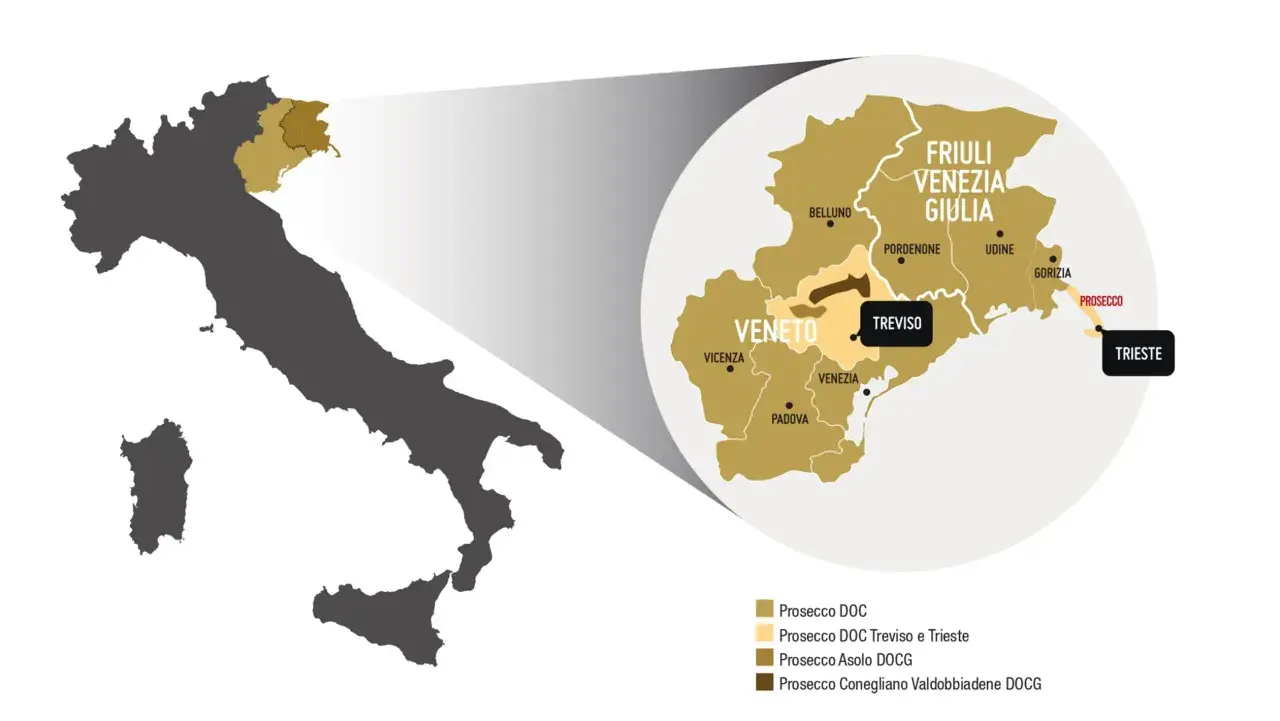
Prosecco is one of those wines whose fame can blur the geography behind it. The answer to where is prosecco from is more precise than most bottle labels suggest: it comes from north-eastern Italy, but the full story includes a protected production zone, a historic village name, and a handful of hill districts that shape the best bottles. I’m focusing on the origin, the labels, and the buying clues that actually help when you’re choosing a bottle for food.
The short answer on Prosecco’s origin
- Prosecco is an Italian sparkling wine from north-eastern Italy, mainly Veneto and Friuli-Venezia Giulia.
- The name is linked to the village of Prosecco near Trieste, but most modern production happens farther inland.
- The premium DOCG bottles come from Conegliano Valdobbiadene and Asolo.
- Label details matter: DOC, DOCG, and the place name tell you how specific the origin is.
- In the glass, origin affects style, freshness, and how well the wine works with food.
Prosecco comes from north-eastern Italy, not from one single town
The simplest and most accurate answer is that Prosecco comes from north-eastern Italy. The broad production zone stretches across Veneto and Friuli-Venezia Giulia, which is why you will see place names such as Treviso, Trieste, or Valdobbiadene on labels and shelf talkers. I find that distinction useful, because it separates the wine’s historical identity from its modern commercial footprint.
There is also a historical layer that trips people up. The name Prosecco is linked to the village of Prosecco near Trieste, so the wine is not “from” one neat little postcard location in the way many shoppers assume. Instead, it is a protected wine tied to a wider territory, and that territory matters as much as the name itself. That geographic split is why the label matters, because not every bottle comes from the same part of the zone.

Why the hills around Conegliano and Valdobbiadene matter
When people talk about the best Prosecco, they are usually talking about the hills between Conegliano and Valdobbiadene. This is the more distinctive, steeper part of the story, and it is where the wine often picks up a little more definition and tension. The UNESCO World Heritage listing for the Prosecco hills underlines how much the landscape itself shapes the wine culture there.
I like this part of the map because it explains why Prosecco is not just a generic sparkling wine in a bright bottle. Steep vineyards, hand work, and a more fragmented landscape usually create a more expressive result than the flatter, higher-yield zones. Asolo is another important DOCG area, but Conegliano Valdobbiadene is the name most readers will remember because it sits closest to the premium end of the category.
Once you know the landscape, the DOC and DOCG labels make a lot more sense.
DOC and DOCG labels tell you how specific the origin is
I trust the label more than the marketing copy. In Prosecco, the designation tells you whether the wine comes from the broad production zone or from a narrower, more tightly defined area. DOC is the wider category, while DOCG points to the hillier, more specific zones where the rules are tighter and the origin is more focused.
| Designation | Where it comes from | What it usually signals | When I would choose it |
|---|---|---|---|
| Prosecco DOC | Broad north-eastern Italian zone across Veneto and Friuli-Venezia Giulia | Fresh, accessible, widely available | Everyday aperitifs, spritzes, casual dinners |
| Conegliano Valdobbiadene Prosecco Superiore DOCG | Hills between Conegliano and Valdobbiadene | Narrower origin, often more definition and precision | When I want a more characterful bottle |
| Asolo Prosecco Superiore DOCG | Smaller DOCG area around Asolo | Another premium hillside expression | When I want a more regionally specific pick |
The important caveat is that DOCG is not a magic word. It usually means a tighter origin and stricter rules, but it does not automatically make one bottle better for every drinker or every meal. What it does give you is a clearer sense of place, and that is often the real reason people pay more. Those labels are useful, but they still only tell part of the story; the grape and winemaking method explain the taste.
What the grapes and method do to the flavour
Most Prosecco is made primarily from Glera, the grape that gives the wine its bright fruit profile and light floral edge. The usual production style is the Charmat method, also called the Martinotti method, where the second fermentation happens in a tank rather than in each individual bottle. That keeps the wine fresh, lively, and relatively straightforward rather than toasty or brioche-like.
That is why I usually expect notes such as pear, apple, white flowers, and a clean finish. The method preserves immediacy, which is a big part of Prosecco’s appeal. It is also why the wine tends to feel more playful and less architectural than Champagne. If you prefer something that feels crisp and immediate, that style profile is exactly the point, and it leads neatly into how I would match it with food.
How I would pair Prosecco with Basque-style food
For food, I reach for Prosecco when the plate is salty, fried, or seafood-led. Pintxos, anchovies, croquettes, calamari, grilled prawns, and salt cod all benefit from bubbles that reset the palate. In that setting, I usually prefer Brut or Extra Brut because they stay sharp enough to cut through oil and salt without getting in the way of the food.
Extra Dry can work too, but I use it more selectively. It feels slightly rounder, so it can be a good match for mildly sweet, spiced, or richer savoury dishes, but I would not make it my default for everything. I would also avoid pairing Prosecco with heavy red-meat sauces or anything strongly tannic, because the wine’s strength is lift, not power.
Serving temperature matters more than many people think. I like it cold, but not ice-cold: around 6-8°C keeps the bubbles lively without muting the aroma. That small detail can matter more than whether the bottle cost a few pounds extra, and it is one reason Prosecco works so well in restaurant settings where food and wine need to move together.
Once you start thinking that way, the label becomes much easier to read.
The label details I check before serving Prosecco with food
- Look for the origin first so you know whether you are buying the broad DOC style or a narrower DOCG bottle.
- Check the place name if you want a more specific hill expression, especially Conegliano Valdobbiadene or Asolo.
- Use sweetness as a pairing tool, not as a status marker.
- Prefer Brut for salty dishes and choose a slightly rounder style only when the food needs it.
That is the most useful answer I can give in practice: Prosecco is from north-eastern Italy, but the bottle’s value depends on how clearly it tells that story. Once you know the difference between the broad DOC zone, the hillier DOCG areas, and the historical name behind the wine, you can buy with much more confidence.
